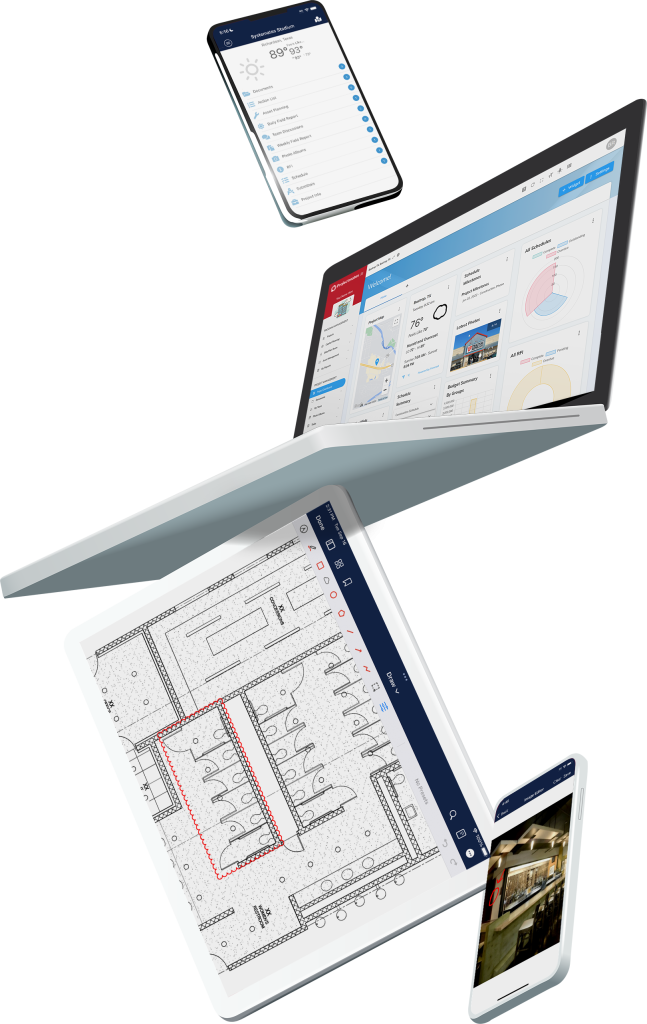
A PMIS (Project Management Information System) is construction management software that helps Owners plan, track, and control capital projects in one structured system.
Instead of managing budgets in spreadsheets, documents in email threads, and approvals in disconnected tools, a PMIS centralizes the full project record, including cost, schedule, contracts, change orders, and reporting.
Owner-focused PMIS platforms like Projectmates are built to support long-term oversight and accountability across the entire project lifecycle, not just day-to-day field coordination.
Construction management software for Owners is designed to give internal project teams and leadership clear visibility and control over capital projects.
It helps Owners manage financial governance, project documentation, approvals, compliance, and portfolio reporting without relying on contractors to provide updates through manual status reports.
Projectmates is built specifically for Owner organizations that need a consistent system of record across projects, partners, and programs.
Owner-focused construction management software is most commonly used by organizations responsible for planning and delivering capital programs, such as:
Within those organizations, users often include project managers, program leaders, finance teams, executives, and compliance stakeholders.
Platforms like Projectmates support both day-to-day project delivery and higher-level portfolio oversight.
A PMIS solves the biggest operational problems Owners face when managing construction:
By centralizing project data and workflows, a system like Projectmates helps Owners stay ahead of cost overruns, reduce administrative burden, and make decisions based on current information instead of outdated reports.
PMIS platforms are used by both large capital programs and smaller Owner teams.
Many organizations start with a single department and expand over time as they standardize processes and reporting.
Projectmates, for example, is designed to scale from individual projects to full portfolios, without forcing Owners into overly complex tools meant for contractors or mega-programs only.
Construction management software gives Owners real-time visibility by centralizing project updates, financials, documents, and workflows in one system.
Instead of waiting for monthly reports or chasing status updates across emails, Owners can see current budget performance, active change orders, upcoming milestones, and mitigate risks as they surface.
In Projectmates, this visibility comes from structured project data, reports, and dashboards that reflect what is happening now, not what was true two weeks ago.
Yes. One of the main advantages of an Owner-focused PMIS is that it connects project-level detail with portfolio-level oversight.
Leadership can view individual project health while also tracking trends across an entire capital program, including budget exposure, schedule risk, and workload across teams.
Projectmates is designed to support both perspectives, so executives do not need separate tools for governance and reporting.
Dashboards in a PMIS typically focus on high-level performance indicators such as:
In Projectmates, dashboards help leadership quickly understand where attention is needed without digging through manual reports or raw spreadsheets.
Yes. Owner-focused construction management platforms are built to support long-term program insight, not just single-project tracking.
By standardizing how cost, schedule, changes, and documentation are captured, Owners can compare performance across projects and identify patterns, such as recurring scope creep, contractor delays, or budget pressures.
With Projectmates, this historical visibility supports better decision-making, stronger forecasting, and more consistent governance across future work.
A PMIS helps control budgets by connecting commitments, change orders, invoices and forecasts in one structured system.
Instead of tracking original budgets in one spreadsheet and changes somewhere else, Owners can see the full financial picture at any point in time, including what has been committed, what has been spent, and what is projected.
In Projectmates, budgets are tied to contracts, approvals and change workflows so cost impacts are visible early. That transparency helps reduce surprises and supports more disciplined decision-making throughout the project lifecycle.
A PMIS cannot eliminate cost overruns. What it does is make them visible sooner, which gives Owners more options in how to respond.
Yes, when the system is structured correctly.
A PMIS surfaces risk by showing trends in cost growth, delayed milestones, aging RFIs, or increasing change volume. When data is centralized and updated in real time, early warning signs are easier to spot.
In Projectmates, dashboards and reporting tools help Owners identify potential exposure before it turns into a major issue.
Forecasting depends on having clean, consistent data.
A PMIS supports forecasting by tracking approved changes, pending changes, and projected cost impacts against the current budget baseline. Instead of reacting after invoices are processed, Owners can evaluate how proposed changes affect the overall financial outlook.
With Projectmates, change management workflows create a documented approval path, which improves accountability and auditability while keeping financial projections aligned with real project conditions.
ROI from a PMIS typically comes from three areas:
The exact return depends on the size of the capital program, existing processes, and how consistently the system is used.
Owners who standardize their workflows in Projectmates often see measurable value in operational efficiency and reporting confidence, especially when replacing manual systems.
Most Owners begin seeing operational improvements during or shortly after implementation, particularly in reporting consistency and reduced manual effort.
Financial and risk-related benefits become more visible once projects are fully running inside the system and historical data starts to accumulate.
The timeline varies depending on organizational complexity and adoption, but the key factor is not just installing the software. It is committing to structured processes inside the platform.
Yes. A PMIS replaces disconnected spreadsheets and email threads with structured workflows and centralized data. Instead of maintaining separate files for budgets, change logs, document tracking, and status reports, everything lives in one governed system.
In Projectmates, project data updates in real time as approvals, changes, and financial transactions move through defined workflows. That eliminates version control issues and reduces the risk of decisions being made from outdated information.
Spreadsheets are flexible. They are also fragile. A PMIS introduces consistency and auditability.
Administrative workload often comes from manually compiling reports, reconciling data between systems, and chasing approvals.
A PMIS reduces that burden by:
In Projectmates, reporting pulls from live project data instead of requiring manual consolidation. That shift alone can significantly reduce the time project teams spend preparing executive updates. AI tools are also revolutionizing how Owners interact with data inside of a PMIS.
The goal is not to eliminate human oversight. It is to remove repetitive administrative friction.
Owner-focused systems are structured to support governance and financial control without overwhelming users with contractor-focused production features.
Projectmates is built specifically for Owner workflows, which helps simplify the experience for internal teams while still supporting detailed tracking where needed.
Adoption improves when workflows reflect how the organization actually operates, rather than forcing teams to adapt to rigid templates.
Project teams using Projectmates can review information, upload documentation, and manage approvals from the field by using the Projectmates mobile app.
With mobile construction management software, your construction team stays updated in real-time. RFIs don’t need to drag on, punch lists can be managed on the spot, and approvals are no longer a bottleneck.
Adoption is driven by clarity and structure.
Owner-focused platforms encourage adoption by standardizing workflows, defining approval paths, and making reporting easier rather than harder.
In Projectmates, consistent processes across projects reduce confusion for both internal teams and external partners. When stakeholders know where information lives and how approvals move, resistance drops.
Software alone does not create adoption. Clear expectations, leadership support, and structured implementation do.
Yes. A core purpose of a PMIS is to support growth from individual projects to full portfolios without changing systems.
Many Owners start by managing one department in a structured platform, then expand as they standardize processes and reporting across their program.
Projectmates is designed to scale across project sizes and complexity levels, supporting both day-to-day execution and long-term capital planning.
Portfolio governance requires consistency, visibility, and accountability across projects.
A PMIS supports governance by providing standardized workflows, centralized reporting, and structured financial oversight so leadership can monitor performance without relying on manual updates from each project team.
In Projectmates, Owners can track project health across the portfolio while maintaining a clear system of record for approvals, changes, and financial decisions.
Most Owner organizations need both:
A PMIS allows Owners to apply consistent processes across projects while still adapting workflows based on delivery method, funding source, or internal policy.
With Projectmates, teams can maintain portfolio-wide structure without forcing every project into the same mold.
Projectmates is designed to help Owner teams align the system to their processes, approvals, and reporting needs without treating every adjustment like a software development project.
By offering extensive configuration capabilities, Projectmates enables users to tailor their workflows through administrative tools, rather than requiring IT to step in every time they want to make a change to the system.
Yes. Public sector Owners often require strong auditability, documentation control, and consistent governance across projects.
A PMIS supports those needs by creating structured workflows, centralized records, and transparent reporting that can stand up to oversight and compliance requirements.
Projectmates is widely used by public agencies and other regulated Owner organizations that need clear accountability across the full capital project lifecycle because of its proven dedication to platform security.
Often, yes. Many Owner organizations need their PMIS to connect with ERP, accounting, or financial reporting systems so project costs stay aligned across platforms.
In Projectmates, integration capabilities depend on the Owner’s environment and how financial data is structured internally. The goal is typically to reduce duplicate entry and maintain consistency between project controls and enterprise finance.
Data consistency is one of the main reasons Owners adopt a PMIS in the first place.
A PMIS creates a structured system of record for project budgets, contracts, change orders, and documentation so teams are not relying on multiple versions of the truth across spreadsheets and disconnected tools.
With Projectmates, Owners can standardize how project information is captured and reported, which makes downstream reporting more reliable even when other systems are involved.
The key is governance: consistent workflows lead to consistent data.
Yes. Owner-focused construction management platforms are designed to centralize the core processes that drive accountability across a project.
That often includes:
In Projectmates, these workflows are structured to support Owner oversight and transparency, helping teams manage project decisions and documentation in one place rather than across separate tools.
A PMIS plays a different role than contractor-focused systems.
GC software is typically optimized for field production and subcontractor coordination. A PMIS is designed to support the Owner’s governance, financial oversight, approvals, and portfolio reporting.
Many Owners use a PMIS like Projectmates alongside an integrated contractor solution like Procore, so each party can work in the platform best suited to their responsibilities while maintaining clear accountability and a consistent record on the Owner side.
Implementation timelines vary based on organizational size, number of projects, level of configuration, and integration requirements.
For many Owner organizations, implementation can take anywhere from a few weeks to several months. More complex capital programs may require phased rollouts across departments.
With Projectmates, implementation is structured around configuring the system to the Owner’s governance processes, financial controls, and reporting needs. The timeline is shaped more by organizational complexity than by the software itself.
Successful PMIS adoption depends on more than system access.
Owner-focused platforms typically include structured onboarding that may involve:
With Projectmates, onboarding is designed to help Owners transition from manual systems to standardized workflows with a hands-on implementation and elevated support to make sure you are successful.
Long-term adoption depends on clarity and consistency.
In Projectmates, defined workflows and centralized dashboards help reduce ambiguity about where information lives and how approvals move. When leadership relies on the system for reporting, adoption typically follows.
Software alone does not drive change. Leadership alignment and process discipline are just as important.
Ongoing support typically includes technical assistance, system updates, and account guidance as organizational needs evolve.
Owner organizations often require continued alignment between evolving capital programs and system configuration. A strong support structure helps ensure the PMIS continues to reflect how the organization operates.
Projectmates provides ongoing in-house support to help Owners maintain system performance and adapt workflows as their programs grow or change.
See What Support Look Like with Projectmates
Most modern PMIS platforms are delivered through cloud-based environments, which allow updates to be deployed centrally without requiring manual installations by the Owner.
Updates generally include feature enhancements, performance improvements, and security updates.
In Projectmates, system updates are managed within the hosted environment so Owners benefit from improvements without maintaining infrastructure themselves.
Security in a PMIS begins with secure infrastructure, encrypted communication, controlled user access, and auditable activity logs.
Projectmates is hosted in Microsoft Azure’s Platform as a Service environment, giving Owners the benefits of enterprise-grade infrastructure without the burden of managing servers.
Data transmitted through Projectmates is protected with SSL encryption using 2048-bit SHA-2, similar to what financial institutions use. The platform also supports two-factor authentication (2FA) to help protect user accounts, and role-based permissions so team members only see the information appropriate for their role. Projectmates includes disaster recovery protocols and active geo-replication to help safeguard data against unexpected outages or disruptions.
Security is not a single feature. It’s a combination of infrastructure, access control, encryption, and governance working together to protect your construction program data.
Public sector compliance isn’t one universal standard—different agencies and funding requirements can call for different frameworks.
Projectmates has achieved SOC 2 Type II compliance, a widely recognized security standard attesting to the design and operational effectiveness of controls related to security, availability, and confidentiality.
In addition, Projectmates holds TX-RAMP Level 2 certification, which is the highest designation available under the Texas Department of Information Resources framework. This certification demonstrates that Projectmates has undergone rigorous evaluation of its security infrastructure, policies, and procedures to meet the needs of state agencies and public higher education in Texas.
Projectmates is hosted on Microsoft Azure using a Platform as a Service (PaaS) model. Azure offers a scalable, secure foundation with strong global security controls and compliance capabilities that support enterprise and public sector environments.
Owners are ultimately responsible for financial accountability, governance, and long-term asset oversight. Contractor-focused tools are not built with those priorities at the center.
Owner-focused construction management software gives Owners independent visibility into budgets, approvals, risks, and portfolio performance. It creates a system of record that supports executive reporting, audit readiness, and capital planning.
Projectmates is designed specifically for Owner organizations that need structured oversight across projects, not production tracking in the field.
Owner PMIS platforms and GC software serve different roles in the construction ecosystem.
GC software is typically optimized for field coordination, subcontractor management, daily logs, and production workflows.
An Owner PMIS focuses on:
A platform like Projectmates supports the Owner’s oversight and decision-making responsibilities across the entire capital program, regardless of which contractors are involved.
They can, but it may not provide the level of independence and governance many Owners require.
GC software is often structured around contractor processes and may not be configured to support Owner-level financial oversight, standardized portfolio reporting, or internal governance controls.
Many Owners choose to implement a dedicated PMIS like Projectmates to maintain control of their data, approvals, and reporting rather than relying solely on contractor-managed systems.
A PMIS does not replace contractor tools. It complements them.
Contractors can continue using their preferred field management systems, while the Owner maintains structured oversight within a platform like Projectmates.
Projectmates also offers integration through its connector for leading GC software platforms, allowing data such as RFIs, submittals and other project information to flow between systems while preserving the Owner’s system of record.
This approach allows each party to operate in the platform best suited to its role while maintaining transparency, accountability and aligned project data.
If you’re evaluating construction management software, you need to see how it works in the real world. In a guided demo, we’ll show you how Projectmates helps Owners manage risk, track budgets in real time and maintain visibility from concept to closeout.
Try Projectmates Free and See the Difference
Get hands-on access to dashboards, workflows, and reporting—exactly what your team will use day to day.