
April Hardaway is a senior member of the Projectmates Product team with nearly two decades of experience in construction project management software. She sat down with product specialist Jake Grinnell to talk about a common challenge in construction project management: Who should be responsible for contract creation and budget management in a Project Management Information System (PMIS)?
Jake: April, I hear a lot of project managers say that letting contractors create their own contracts and manage budgets in Projectmates could take some pressure off their teams. On the surface, it sounds like a good idea. But in practice, I’ve seen it cause all kinds of headaches. What’s your take?
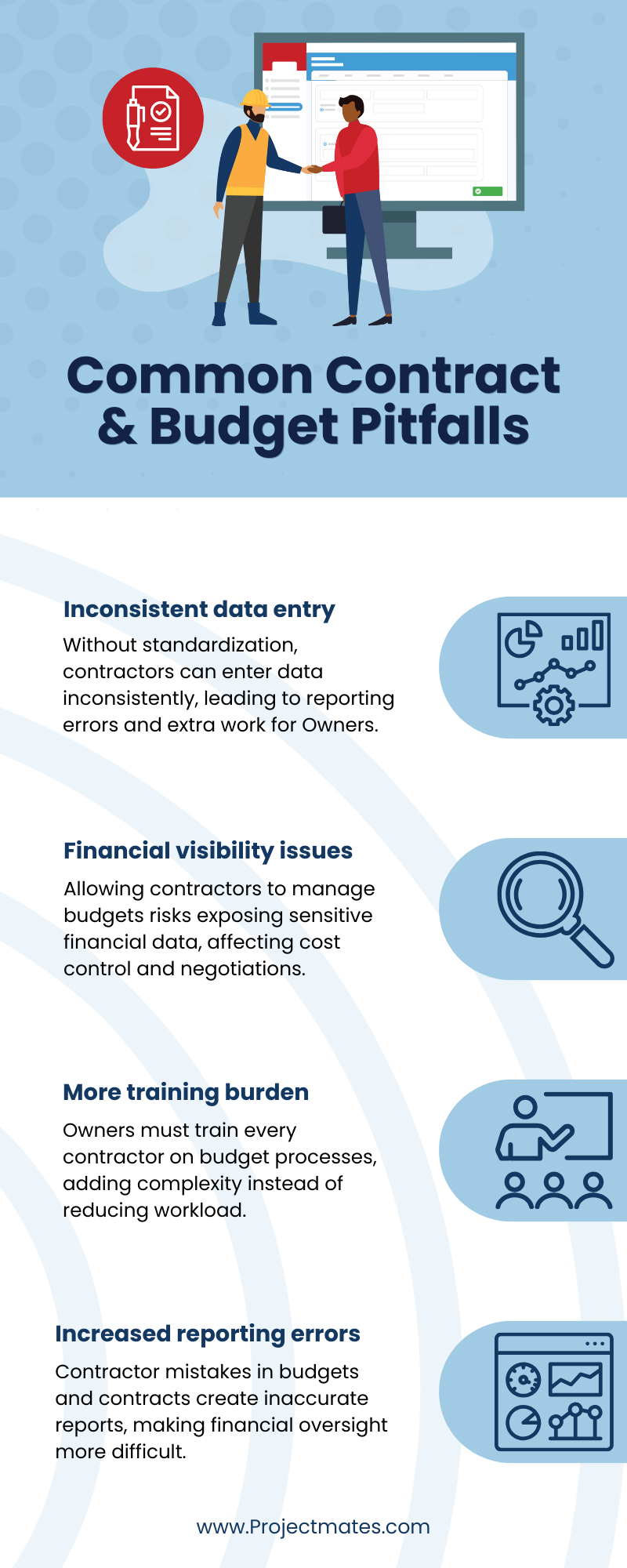
April: Yeah, I get why it sounds appealing—less work for the internal team, right? But in reality, it usually creates way more problems than it solves. One of the biggest benefits of a PMIS like Projectmates is keeping everything standardized and transparent. If every contractor is entering their own contract and budget info, you lose that consistency, and then reporting becomes a mess.
Jake: Right. Even if you give them clear guidelines, there’s no guarantee they’ll follow them exactly. And if contractors are linking their contracts to the budget, that’s a whole other can of worms.
April: They might end up seeing financial details that really should be controlled by the Owner, and we don’t want that. Then there’s the issue of purchase orders and contract structures. If different contractors do things differently, you’re right back to fixing errors and reconciling numbers instead of streamlining anything. Plus, some people think pushing contract management to contractors means less training for their team, but it’s actually the opposite.
Jake: So now you have to train every contractor on your process and still double-check their work. April, what’s a better way to handle it?
April: Owners ought to keep control of contract creation and budget management in-house. And with Projectmates, it’s not a heavy lift. If you’ve got a solid budget template, you can set up projects manually or import them in bulk—it’s basically the same amount of effort whether you’re managing one project or 20. If projects have similar budget structures, you can use templates with pre-set formulas to handle calculations automatically. That means setup is faster than you’d think, and once the budget is in place, creating bid packages or contracts takes minutes instead of hours.
Jake: And I just want to reiterate that contractors still have a role, but in a way that keeps everything structured. Instead of managing budgets, they enter their costs using pre-set line items. That keeps things consistent and removes the risk of them seeing sensitive financial data.
April: Exactly. And because everything stays aligned with the Owner’s processes, reporting is seamless. This isn’t just about reducing workload—it’s about making the entire program management process more efficient. Giving Owners full control while still making things easy for both internal stakeholders and contractors where it counts.
Frequently Asked Questions (FAQs)
When contracts and budgets are disconnected, project teams often overspend or miss critical changes. Integrating contracts with real-time budget tracking helps prevent cost overruns, enforces compliance, and improves financial visibility for Owners.
Modern construction management software allows teams to generate contracts from templates, link them directly to budgets, and automate approval workflows. This reduces manual entry and ensures that all contract terms are visible and auditable across the project.
Spreadsheets are prone to version control issues, human error, and lack visibility across stakeholders. Inaccurate or outdated spreadsheets can lead to misaligned budgets, duplicate payments, or unauthorized scope changes.
Owners can improve budget management by using a centralized project management information system (PMIS) that ties budget items to contracts, change orders, and actuals. This approach supports better forecasting and real-time decision-making.
Yes. A PMIS enables proactive management of contracts, budgets, and change orders by keeping all stakeholders informed and aligned. Real-time insights help identify risks early and course-correct before they become costly.
For more information about how Projectmates can optimize your construction project management processes, contact us today.