Risk is built into every construction project.
From the moment of project conception, risk starts stacking up: in the scope, in the schedule, in the contracts, and in the assumptions that no one questions until it’s too late.
Yet, for Owners, risk is often treated as someone else’s problem. Covered by the GC. Handled by insurance. Buried in the contract terms.
But if risk is truly “covered,” why do delays, budget blowouts, and compliance surprises still happen on even the best-planned jobs?
Because construction risks aren’t always where we expect them to be.
With so many moving parts—multiple stakeholders, complex supply chains, evolving regulations, and dynamic site conditions—construction projects are uniquely exposed to uncertainty. Even well-managed projects are susceptible to surprises. That’s because not all risks are obvious, and many are not fully within a single party’s control.
This blog post kicks off a new four-part series on proactive risk management for construction Owners, exploring where conventional risk management approaches fall short, highlighting the risks that can be overlooked in seemingly sound projects, and offering strategies Owners can use to stay ahead.
Where Risk Management Falls Short: Interconnected and Hidden Issues
Traditional risk registers give you the illusion of control.
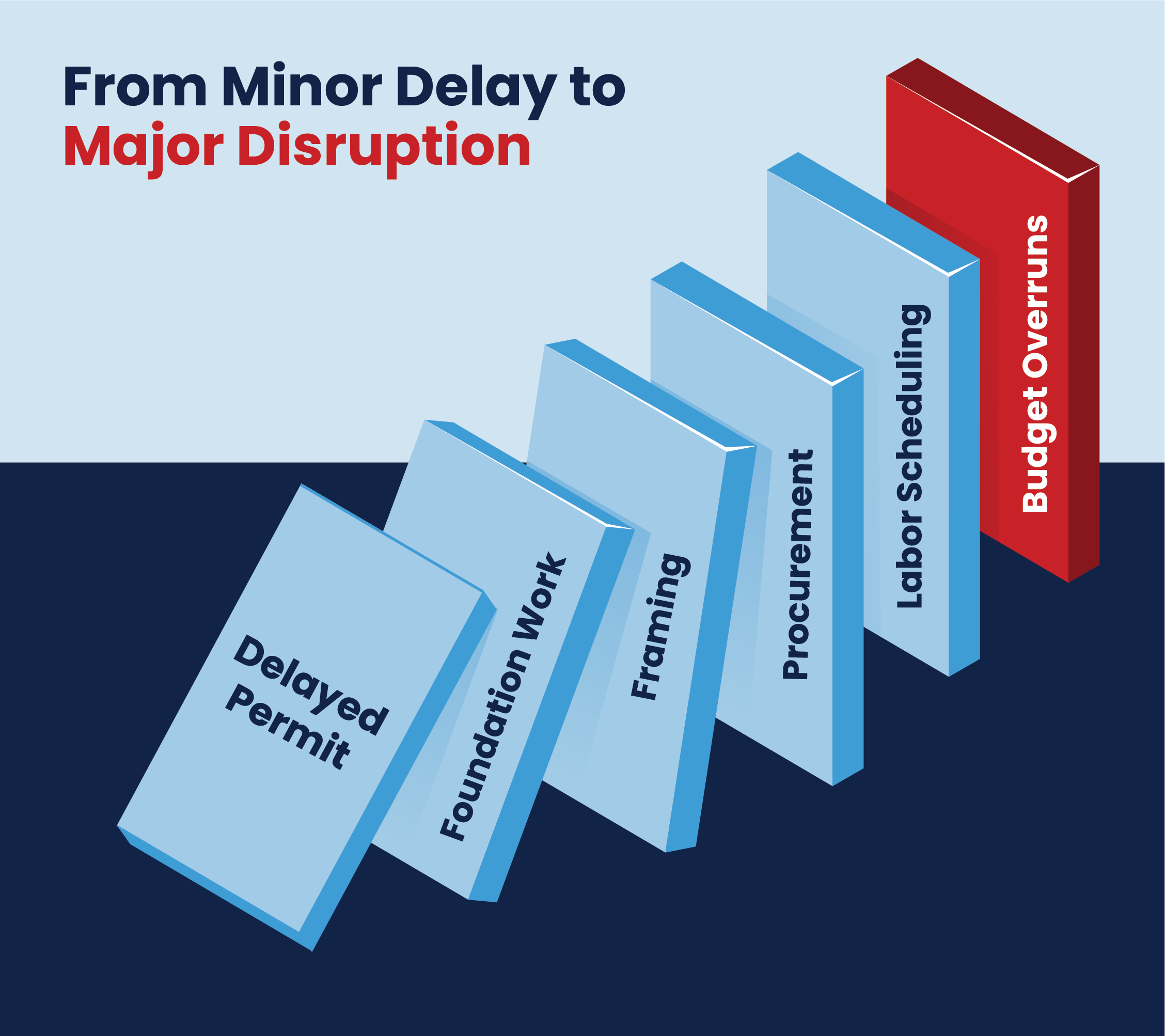
They list known threats—weather, material prices, permits, labor—but real-world risks rarely stay in their assigned categories. In construction, risks are interconnected. A disruption in one area almost always triggers ripple effects somewhere else.
Take utility coordination. A late adjustment might seem like a minor hiccup. But if it delays the foundation, framing gets pushed, inspections fall behind, and suddenly a missed milestone triggers liquidated damages. One small issue becomes a chain reaction—especially when teams operate in silos where bad communication is a limiting factor.
What about permitting? A routine permit delay can hold up contractor mobilization, scramble trade sequencing, and push procurement out of sync, resulting in idle labor, equipment inefficiency, or scope conflicts. These secondary impacts often go unmeasured until they start significantly affecting the budget.
You can see examples of this all over California’s High-Speed Rail project, where initial cost estimates nearly doubled. Much of that ballooning came from underestimating land acquisition needs, design complexity, and environmental mitigation. Low contractor bids failed to capture the true scope, leading to a flood of change orders and delays.
It wasn’t one issue. It was the system.
The key issue is that standard risk assessments often treat risks as isolated variables rather than part of a system. Owners need tools, processes, and questions that expose cross-scope dependencies before they turn into expensive surprises.
Hidden Risks in Well-Planned Projects
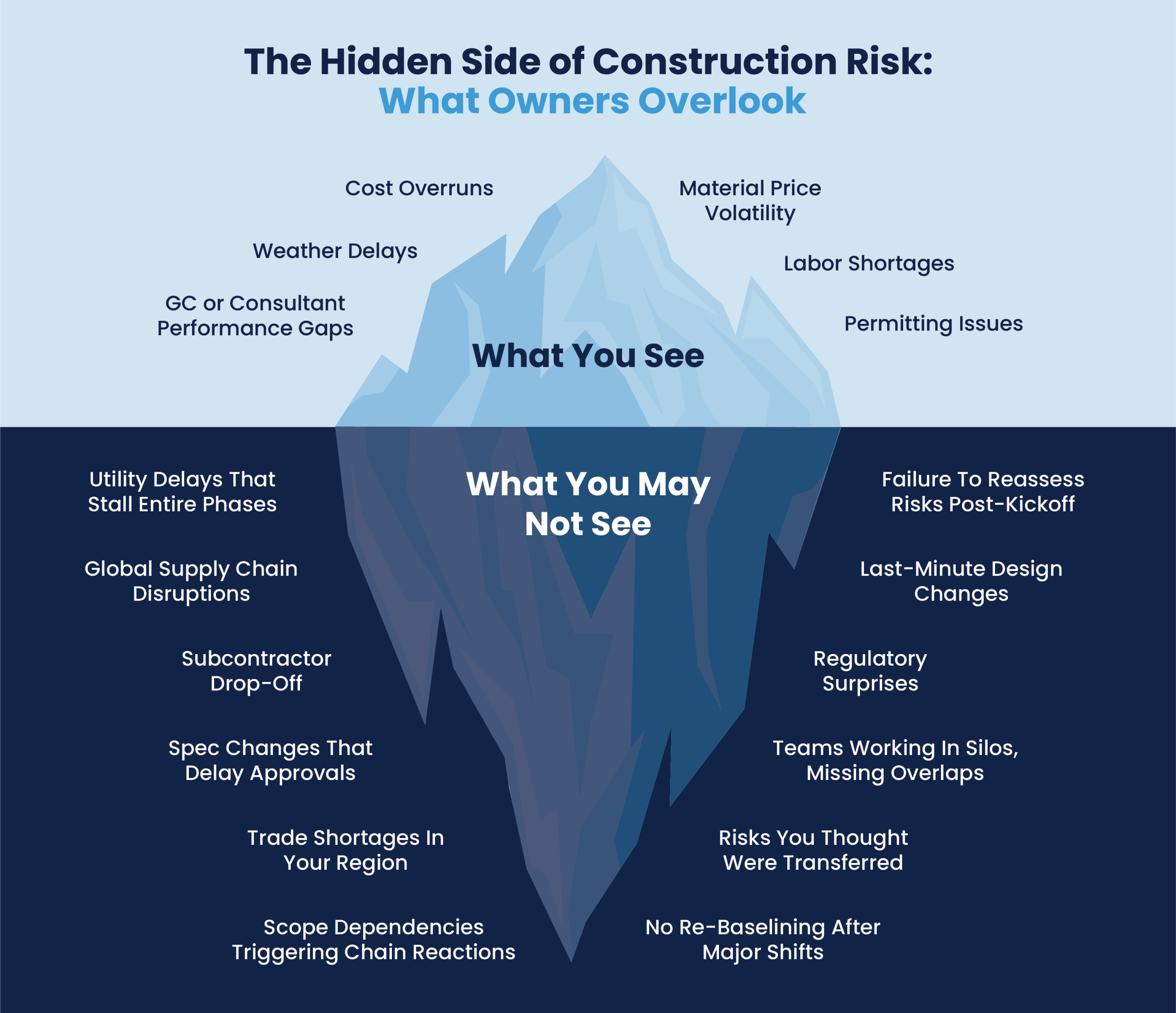
Even the best project managers miss things. That’s not a knock on the team—it’s a reality of construction. Risks hide in the gaps between contracts, scopes, and assumptions of responsibility. Owners may believe they’ve transferred certain risks to contractors or vendors, but unless those risks are actively managed across the team, Owners are still exposed.
Supply chains are a prime example. A GC may be contractually responsible for procurement, but if the project depends on long-lead equipment or specialty materials from overseas, any global disruption—from port slowdowns to new tariffs—can halt progress. These global risks rarely show up in a Gantt chart or a risk register.
Take, for example, the Melbourne Metro Tunnel Project (Australia). Despite strong planning, it has experienced electromagnetic interference near hospitals and workforce shortages, causing cost escalations.
Other hidden risks include:
- Workforce availability. During post-COVID labor shifts, certain trades became regionally constrained, leading to higher costs, delays, or out-of-sequence work.
- Adjacent project conflicts. Shared subcontractors across nearby projects can stretch capacity and reduce quality control.
- Spec substitutions. Supply limitations sometimes trigger unplanned material switches late in the game, which can introduce design coordination issues or affect long-lead inspections.
These risks don’t wave red flags in preconstruction meetings. They surface mid-project—unless you’re actively looking for them.
Risks Owners Think They’ve Transferred—but Haven’t
Just because a risk is in the contract doesn’t mean it’s off your plate.
Owners often assume they’ve transferred key risks—through GC agreements, insurance, or consultants. But transfer doesn’t mean elimination. If something goes wrong, the impact still lands on your schedule, your funding, and your reputation.
Common examples that bounce back:
- Permitting delays. The task may be delegated, but the fallout—from missed mobilization to delayed inspections—still hits the Owner’s milestones.
- Material price volatility. Cost escalation clauses offer some protection, but if procurement slips, your exposure to market shifts increases.
- Subcontractor insolvency. A collapsed sub doesn’t just cause delays—it can shrink your bid pool, raise costs, and fracture your critical path.
Contract terms only go so far. If risks aren’t actively monitored and stress-tested throughout the project, “transfer” becomes a technicality, while the damage is very real.
Beyond the Contract: Managing Risk Proactively
Contracts play a vital role in assigning responsibility, but they’re not a substitute for ongoing risk management. Transferring responsibility to a GC or consultant doesn’t erase the impact if things go sideways.
Proactive Owners don’t just rely on documents. They build habits that keep risk visible, dynamic, and actionable throughout the project.
Here’s what that looks like:
- Reassessing risks regularly. One-time risk registers go stale fast. Hold quarterly reviews with your GC, architect, and rep to surface new exposures and revisit old assumptions.
- Asking sharper questions.
- What risks are we assuming are “standard” and not tracking?
- What’s changed since our last review?
- What if our schedule shifts by 3 months? What breaks?
- Building flexibility into contracts.
Include early warning triggers, escalation points, and re-baselining provisions. Don’t just lock in expectations—prepare for change.
Take performance clauses. You might have tight deliverable language, but if unforeseen design revisions or new inspection requirements blow up the timeline, you’re still on the hook, whether or not the GC is “liable.”
Scenario planning helps Owners stay ahead. Not just at kickoff, but at key milestones, when new realities surface. Rather than relying solely on contract terms, this approach challenges assumptions, reviews current market conditions, and evaluates new exposure areas that weren’t visible at award time.?
Strategic Questions Owners Should Ask
The strongest risk strategies start with good questions.
Proactive Owners don’t wait for problems to surface. They challenge assumptions, pressure-test plans, and force clarity before cracks form.
Here are the kinds of questions that uncover hidden risks before they become headaches:
- What assumptions are driving our schedule and budget? What if those change?
- Are any scopes or trades tied to global supply chains or specialty materials?
- What’s the contingency plan if a key sub underperforms or defaults?
- Are we assuming a risk is “transferred” when it’s really shared?
- How are cross-scope dependencies being managed day-to-day?
- What upcoming regulations could affect our timeline, compliance, or environmental impact?
Reframing Risk as Strategy
Risk doesn’t have to be feared—but it does have to be owned.
Owners who actively engage in risk—not just at contract time, but across execution—create stronger, more adaptive project teams.
Construction today is more complex than ever. The industry is navigating material volatility, regulatory tightening, ESG requirements, and rising public scrutiny. Projects are larger, faster, more visible—and often less forgiving.
But with a proactive mindset, risk becomes a strategic tool. You won’t eliminate every issue, but you can anticipate them, contain them, and respond faster than anyone else in the room.
In the next post of this series, we’ll explore one of the most common blind spots for Owners: financial and contractual risks that appear covered on paper, but create real exposure in practice.
Frequently Asked Questions About Proactive Risk Management in Construction
Proactive risk management allows owners to identify potential issues before they escalate, ensuring projects stay on schedule and within budget. By anticipating risks, owners can implement mitigation strategies early, reducing the likelihood of costly delays and overruns.
Common risks include:
Schedule delays: Due to unforeseen site conditions or resource shortages.
Budget overruns: From inaccurate cost estimates or scope changes.
Compliance issues: Related to regulatory requirements or safety standards.
Communication breakdowns: Leading to misunderstandings among stakeholders.
Recognizing these risks early enables Owners to develop appropriate contingency plans.
Effective risk identification involves:
Conducting thorough project assessments: Evaluating all aspects of the project for potential risks.
Engaging stakeholders: Gathering insights from contractors, architects, and engineers.
Utilizing risk assessment tools: Implementing software solutions that track and analyze risk factors.
Regularly updating risk assessments throughout the project lifecycle ensures ongoing vigilance.
Owners can mitigate risks by:
Developing comprehensive risk management plans: Outlining procedures for addressing potential issues.
Allocating contingency budgets: Setting aside funds to cover unexpected costs.
Establishing clear communication channels: Ensuring all stakeholders are informed and aligned.
Implementing robust contract management: Clearly defining roles, responsibilities, and expectations.
These strategies help in minimizing the impact of risks on project outcomes.
Projectmates offers features that enhance risk management, including:
Real-time data analytics: Providing insights into project performance and potential issues.
Centralized documentation: Ensuring all project information is accessible and up-to-date.
Automated workflows: Streamlining processes to reduce human error and delays.
Customizable reporting tools: Allowing owners to monitor risk indicators effectively.
By leveraging these tools, Owners can proactively address risks and maintain control over their projects.