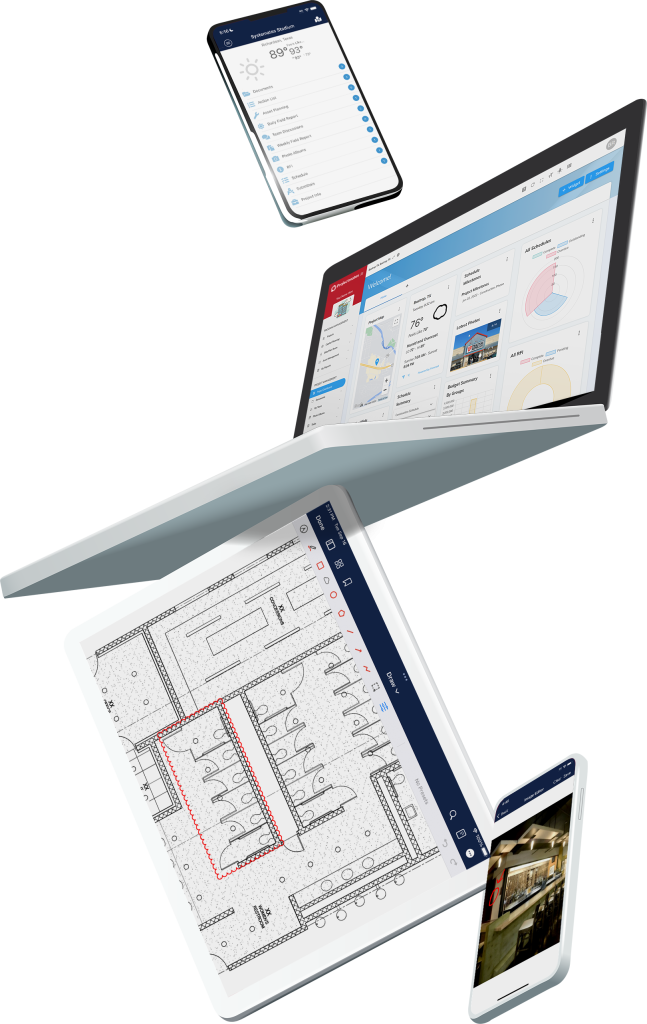
Capital planning sounds easier in theory than it feels in practice. Most Owners are juggling too many tools, too many spreadsheets, and too many decision makers. In this session, Projectmates Vice President Marcus Bliss and Senior Project Manager Jamie Rogers broke down how to simplify all of it by bringing planning, funding, and execution into one connected system.
They also shared a candid conversation with Will Rose, Administrator of Fiscal Operations for the City of Newport News, who walked through how his team manages a five-year CIP while keeping hundreds of people informed.
You can get a high-level rundown of what was covered below or watch the entire recording HERE.
Why Technology Can Either Help or Hurt Capital Planning
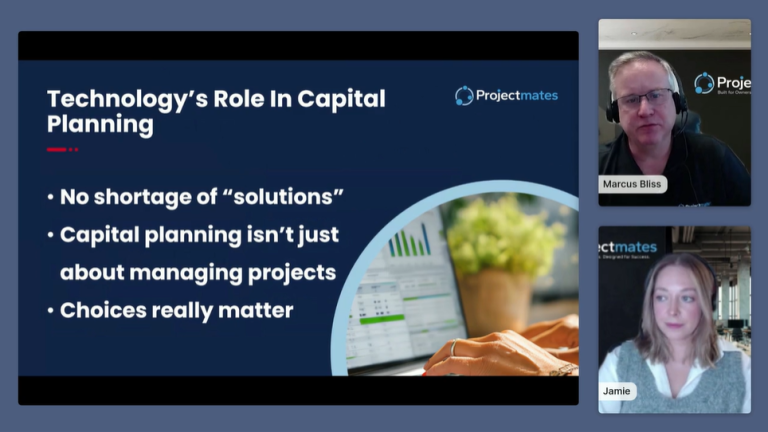
Marcus opened the session with a reality check. Some Owners are overloaded with tools that never talk to each other. Others avoid new technology altogether. Both end up in the same place: scattered versions, buried context, and reporting that is always a step behind.
His point was simple. Capital planning only stabilizes when planning data, funding data, and project execution live in the same environment.
How Newport News, VA Approaches Capital Planning
Will Rose, Administrator of Fiscal Operations for the City of Newport News, outlined how CIP planning comes together across departments, from early needs lists to budget reviews to council adoption. Before moving to a PMIS, everything lived in spreadsheets. That meant limited visibility, no clean narrative behind the numbers, and constant confusion over which version to trust.
Once they shifted to Projectmates, they finally had one shared starting point. Project Managers understood their funding status. Contract commitments and actuals are fed directly into the plan. Reporting became faster and far more reliable. And with so many people involved, that consistency made the entire process easier to manage.
What Capital Planning Looks Like Inside a PMIS
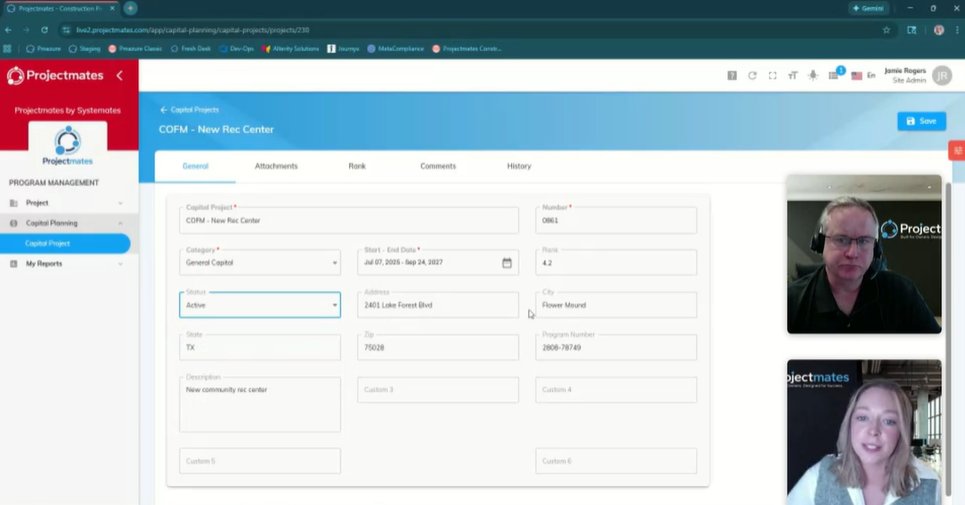
Jamie walked through the process from a practical lens. Requests come in through a standardized form. Projects can be created or imported in bulk. Ranking criteria reflect what each organization values. Funds flow into phases and years. And as projects progress, real commitments and actuals automatically pull into the plan.
The takeaway: you stop maintaining spreadsheets and start managing your program.
Best Practices from the Session
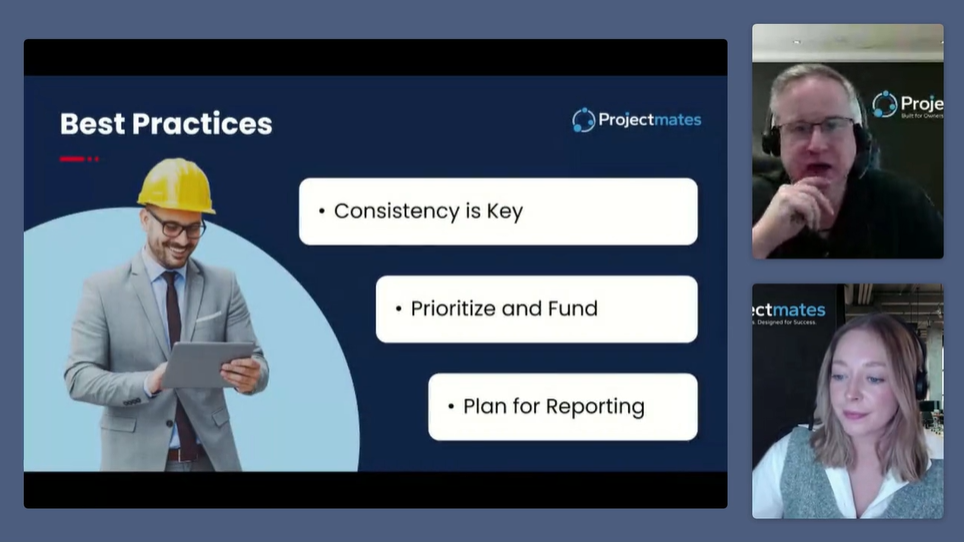
Marcus closed with a few straightforward guidelines. Keep your structure consistent so your data stays comparable. Define how projects move from request to funded. And make sure you know which reports matter so you can make decisions with current information, not outdated files. Capital planning gets a lot easier when your tools help rather than slow you down. Bringing everything into one system gives Owners the clarity they need to plan confidently and keep projects moving.
Frequently Asked Questions (FAQ)
Yes. That’s actually the biggest value. When planning data, funding status, and project execution all live in one system, you eliminate version confusion and stop spending meetings arguing about numbers.
Not nearly as much as people expect. Most Owners start simple: import existing projects, set up funding sources, and build the ranking model. From there, teams layer in workflows and reporting as they get comfortable.
You get the ability to create snapshots, test escalation scenarios, and tie future costs directly to funding availability. It removes the guesswork and lets you see the long term impact of today’s decisions.
No. It complements it. Contracts, commitments, and invoices flow into the capital plan, but your financial system remains the system of record for actuals. Together, they give you a complete picture.
Reinventing the workflow every few months. The best results come from consistent structure, predictable funding steps, and a single source of truth.