What Is a Construction Schedule?
A construction schedule defines what tasks must occur, when they occur and who performs them. It is a detailed, project timeline outlining the sequence, duration and dependencies of tasks. A construction schedule coordinates labor, materials and equipment to ensure timely completion. It acts as a time-based roadmap and a tool to align subcontractors, track progress, manage costs and prevent delays by setting key milestones from start to finish.
A construction schedule is essential in construction project management as it serves as the operational roadmap across the construction project lifecycle. It ensures on-time delivery, optimized resource allocation and cost control. It aligns stakeholders, such as Owners, contractors, and suppliers, to minimize conflicts, enhance safety planning and enable proactive risk management. Having a comprehensive construction schedule will ultimately prevent costly delays.
Why a Construction Schedule Is Critical to Project Success
A construction schedule is important for ensuring projects are completed on time and within budget. It acts as a roadmap coordinating labor, materials and equipment. A construction schedule also boosts efficiency by identifying critical tasks, reducing idle time, minimizing risks and improving communication among stakeholders. This prevents costly delays and ensures a smoother, safer workflow.
Without construction schedule management projects typically suffer from severe delays, budget overruns and chaotic, uncoordinated work. This situation creates confusion, poor communication, hinders productivity and makes it impossible to track progress or manage risks. In the end not having a construction schedule will reduce profitability and increase the likelihood of problems.
Key Benefits of a Construction Schedule
- Improves time management in construction.
- Reduces delays and disputes.
- Enhances resource allocation.
- Improves cost predictability.
- Creates accountability across stakeholders.
Step-by-Step: How to Make a Construction Schedule
Developing a construction schedule involves breaking down a project into manageable tasks, sequencing them logically and assigning realistic timeframes and resources to ensure timely completion. It functions as a comprehensive roadmap detailing who does what, where and when. In this section, we will cover the eight steps that we feel help create an ideal construction schedule.
Steps for a Construction Schedule
- Define the Scope and Major Milestones
- Build a Work Breakdown Structure (WBS)
- Identify Task Dependencies
- Estimate Durations
- Allocate Resources
- Identify the Critical Path
- Select the Right Scheduling Format
- Establish a Baseline and Monitor Progress
Step 1: Define the Scope and Major Milestones
A construction schedule will establish a project’s objectives. It will clearly define the project scope and major milestones that are to be accomplished. The scope will clearly outline and identify the work, deliverables and boundaries of a project, while confirming each stakeholder’s role.
The major milestones of a construction schedule will be high-visibility, zero-duration checkpoints that should mark the completion of major phases or critical decisions with set dates and deadlines. Key milestones, such as permits, foundation completion and walkthroughs, will track the overall progress of the project and help manage accountability. This will ensure timely, cost-effective delivery.
Step 2: Build a Work Breakdown Structure (WBS)
Developing a Work Breakdown Structure (WBS) involves breaking down the total project scope into manageable, hierarchical components or phases listing the deliverables and work packages that are to be accomplished. A WBS acts as a foundation for the construction schedule by organizing work into logical, cost-controllable and assignable task-level components.
This entails typically moving from major project phases to specific, actionable work packages. By breaking the project into phases and dividing the work into task-level components the overall plan becomes much more manageable.
Best Practices for a WBS
- Follow the 100% Rule: The sum of the sub-tasks must equal 100% of the work of the parent task.
- Focus on Outcomes: Maintain a focus on deliverables, not actions.
- Assign Responsibility: Each work package should have a single, clear owner.
- Use Hierarchy: Use a consistent numbering system for your WBS.
Step 3: Identify Task Dependencies
Identifying task dependencies in a construction schedule will help ensure projects stay on time and on schedule by mapping relationships where one task relies on another. Key actions include defining task sequencing, mapping out logical relationships, identifying predecessor and successor activities and highlighting constrains. A task dependency workflow should identify the different types of work and if construction can proceed and to what extent.
Task Dependency Types
- Finish-to-Start: Task A must finish before Task B can start. Example: Concrete must cure before the wall frames can go up.
- Start-to-Start: Task A must start before Task B can start. Example: Electrical conduit installation begins after wall framing starts.
- Finish-to-Finish: Task A must finish before Task B can finish. Example: Plumbing inspection must be finished before drywall installation finishes.
- Start-to-Finish: Task A must start before Task B can finish. This is rare. Example: Old crane operations finish only when the new crane is operational and ready.
Step 4: Estimate Durations
Estimating project duration can be tricky. It involves calculating individual task activity durations based on quantity and production rates. Key techniques include using historical data, consulting trade partners and using formulas to calculate total duration. Estimate durations should account for lags, labor, weather and available resources. There are several different methods for estimating project and task durations.
Common Estimation Techniques
- Analogous Estimating: Durations are based on similar past projects and adjusting for size and complexity differences.
- Parametric Estimating: Time is used for calculations. Example: 100 linear feet of wall / X hours of production rate.
- Bottom-Up Estimating: Detailed, granular tasks are identified and summed for the total duration.
- Three-Point Estimating: The expected time is calculated using a formula:

Step 5: Allocate Resources
Resource allocation in construction can be similar to a balancing act. Owners do not want to stretch or overcommit limited labor crews. Proper calculations are important, so labor is not underutilized or over-stressed.
A well-thought-out plan will identify necessary labor, materials and equipment for each task, then schedule properly to avoid bottlenecks. Effective allocation relies on forecasting needs, creating 3-week lookaheads, leveling resources to prevent over-allocation and using digital tools to track usage. This will ensure efficient, just-in-time delivery and minimize downtime.
Key Actions for Effective Resource Allocation
- Identify and Quantify Resources: Determine the specific labor required, such as skilled or unskilled;
the necessary equipment, such as cranes, trucks, and earth movers; and the materials needed for each activity in the construction schedule. - Create a Resource-Loaded Schedule: Integrate resources into construction scheduling software, such as Projectmates, to map when materials and personnel are required.
- Apply Resource Leveling: Adjust the schedule to resolve over-allocations, ensuring a subcontractor is not booked for two jobs simultaneously, by delaying non-critical tasks to smooth demand.
- Utilize 3-Week Lookaheads: Regularly review the next three weeks of work to ensure materials are ordered and staff are available, aligning daily actions with the master schedule.
- Implement Just-in-Time Delivery: Coordinate with suppliers to have materials arrive right when they are needed. This reduces on-site storage needs, prevents damage and improves site efficiency.
- Prioritize Critical Tasks: Use the Critical Path Method (CPM) to prioritize high-value resources, ensuring that tasks affecting the overall project completion date have the resources they need.
Step 6: Identify the Critical Path
The Critical Path Method (CPM) is a project management technique that identifies the longest sequence of dependent tasks and calculates the shortest time needed to complete a project. Highlighting tasks with zero flexibility, or float, helps managers prioritize activities and avoid project delays.
The main components of CPM are the forward pass and the backward pass. The forward pass calculates the earliest possible start and finish times for each task to find the minimum project duration. The backward pass calculates the latest possible start and finish times without causing a project delay. This helps determine the float, or flexibility. CPM can help improve the overall competition timeline or date of a project by determining the end date, pinpointing bottlenecks, refocusing management, enabling optimization and identifying areas of flexibility.
Key Aspects of CPM
- Identify Critical Tasks: Determine which tasks must be completed on time to prevent the entire project from being delayed.
- Calculate Project Duration: Calculate the minimum time required to complete the project. This can be determined by the longest path through the project, from start to finish.
- Determine Float/Slack: Calculates the float, or slack, for each activity. This is the amount of time a task can be delayed without delaying the project. This allows teams to know which tasks are flexible and which are not.
- Visualize Dependencies: Use project timeline creation tools to map out the order of tasks and their relationships.
Step 7: Select the Right Scheduling Format
Construction scheduling software should be used when managing complex, multi-stakeholder projects to improve efficiency, reduce risks and manage resources. Software can help when manual methods, such as spreadsheets, become inefficient or error prone. Construction workflow management software is essential for tracking critical paths, managing deadlines, ensuring real-time collaboration and resource allocation in construction. Construction cost tracking software can help with automating record keeping and estimating costs. Analytics and reporting dashboards that are part of capital program management software can assist with tracking project scope, task timelines, scheduling resources, improving planning and completing tasks.
Owners can also use project timeline creation tools or workflow tools for construction that can greatly help improve construction project management. Tools such as Gantt charts, network diagrams and time-scaled logic diagrams work well for developing construction planning techniques and construction scheduling strategies.
Network diagrams are visual, logical representations of project workflows, mapping activity dependencies and sequences to calculate overall project duration. They are great for managing construction delays. Network diagrams often use the CPM and help define the longest sequence of tasks, or critical path, to prevent delays and optimize schedules.
Gantt charts are another useful tool for construction work and breakdown structure. They are a visual project management tool that maps out tasks against a timeline, showing start/end dates, dependencies and progress. Gantt charts use horizontal bars to represent the duration of tasks, allowing teams to track schedules, identify bottlenecks and manage resources efficiently. They are a helpful project timeline tool.
Time-scaled logic diagrams are project scheduling tools that merge network logic, or dependencies, with a Gantt chart, plotting activities on a linear timescale. These diagrams represent activity durations as bars and show relationships via arrows, offering a precise visual of project flow, critical paths and durations.
Step 8: Establish a Baseline and Monitor Progress
Establishing a construction baseline and monitoring its progress involves comparing the original planned scope of the project and its stated project timeline against actual performance in the real world over time. This is done so that deviations can be identified and acted on before they compound. Monitoring progress requires updating this baseline with actual field data, such as daily logs, percentages complete and resource usage, to compare against the scoped plan and identify variances.
Steps for Monitoring Progress
- Approve baseline schedule.
- Track progress weekly.
- Monitor schedule variance.
- Adjust to manage construction delays.
Common Construction Scheduling Methods Explained
The Critical Path Method (CPM) is a construction project management tool that is used to determine and identify the longest stretch or sequence of dependent activities and tasks. It then calculates and measures the time required to complete the tasks from start to finish. It is commonly used in conjunction with the Program Evaluation and Review Technique (PERT).
The Program Evaluation and Review Technique (PERT) is a construction project management tool used to plan, schedule, and coordinate complex tasks by analyzing the time required for each task, especially when task durations are uncertain. It uses three-time estimates, such as optimistic, pessimistic, and most likely, to calculate a weighted average duration for tasks, identifying the critical path to optimize project completion times.
Resource-oriented scheduling refers to assigning and managing resources, such as people, equipment and materials, to various tasks and projects. The primary purpose is to ensure that the right resources are available at the right time to complete tasks efficiently and effectively. This method is critical in construction project management because it helps balance workloads, avoids resource conflicts, optimizes the use of limited resources and helps in managing construction delays.
The Last Planner System (LPS) is a lean construction project management tool that improves workflow reliability by empowering those directly executing the work, such as the foremen and superintendents, to collaboratively plan, reduce bottlenecks and manage weekly commitments. It boosts on-time completion rates through proactive constraint removal.
Gantt chart scheduling in construction is a visual project management tool that maps out tasks, durations and dependencies against a timeline. It displays tasks as horizontal bars, allowing managers to track progress, assign resources and identify critical paths, ensuring projects stay on schedule.
Best Practices for Construction Scheduling
When developing a construction schedule, it is important to develop a detailed WBS, use the CPM to identify key tasks and incorporate regular, dynamic updates. Key construction best practices also include setting realistic timelines, building in contingencies for risks, optimizing resource allocation and maintaining clear communication using collaborative construction scheduling software.
Best Practices for Construction Scheduling
- Build realistic timelines.
- Conduct risk assessments.
- Integrate budgeting with scheduling.
- Review schedules regularly.
- Improve workflow optimization.
- Align schedule updates with pay applications.
Common Scheduling Mistakes to Avoid
Common construction scheduling mistakes to avoid include creating schedules in isolation, neglecting to add contingency buffers and failing to update progress regularly, which leads to delays and cost overruns. Effective schedules require detailed tasks, realistic resource allocation and the incorporation of procurement lead times.
Common Scheduling Mistakes to Avoid
- Overly aggressive timelines.
- Ignoring resource constraints.
- Failing to update the schedule.
- Poor communication between field and office.
- Relying on spreadsheets instead of workflow tools for construction.
How Technology Improves Construction Scheduling
Technology improves construction scheduling by shifting from static, manual planning to dynamic, real-time, data-driven systems. This transformation increases project efficiency, reduces human error and allows for proactive, rather than reactive, construction project management. Modern workflow tools for construction enable managers to optimize resource allocation, automate repetitive tasks and instantly update timelines to reflect actual job site progress.
Having reliable and productive construction scheduling software will optimize projects by automating timelines, enhancing communication and streamlining resource allocation in construction. This will directly reduce delays and costs. Software also provides real-time updates for teams, improves accuracy in documentation, mitigates risk through proactive planning and boosts productivity by keeping field and office staff aligned. Spreadsheets cannot do all these tasks and will break down over time. Construction scheduling software also provides for real-time collaboration, project scope and portfolio-level visibility, work breakdown structure, cost tracking and workflow tools for construction management.
How Projectmates Supports Schedule Management Across Capital Programs
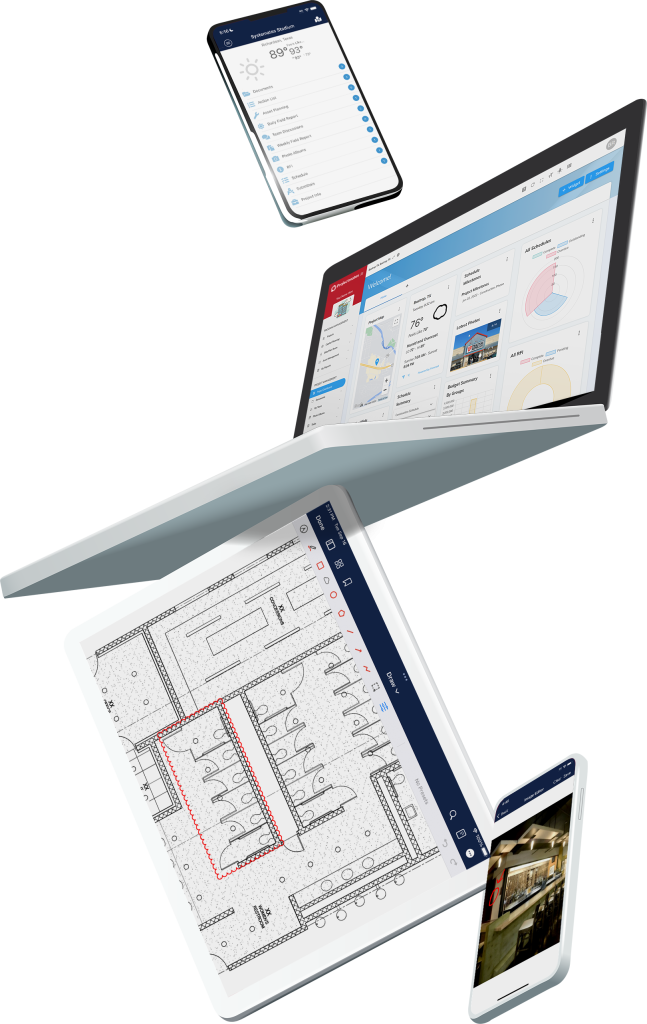
Projectmates supports capital program schedule management by providing centralized, real-time oversight of multiple projects, using CPM, Gantt charts and automating task dependencies in its capital program management software. The platform enables proactive task management through integrated workflows and offers construction scheduling strategies for ensuring project schedules stay aligned with milestones.
The platform also provides centralized scheduling, workflow automation, resource visibility and real-time analytics and reporting dashboards. Projectmates provides Owners portfolio oversight across multiple projects in one web-based construction project management platform.
Build More Predictable Construction Schedules
Projectmates helps Owners deliver construction programs with clarity, control and confidence. Built specifically for owner-led capital program leaders, our construction workflow management software provides real-time visibility into budgets, schedules and risks. This helps Owners reduce misinformation, prevents costly delays, and replaces the manual processes that drain time and money from construction projects. The result is better decisions, stronger accountability and projects that perform the way they are supposed to.
Our platform builds more predictable construction schedules by providing real-time, cloud-based, and collaborative scheduling tools that integrate directly with project workflows. It enhances predictability through critical path monitoring, automatic task dependencies and by linking schedules directly to construction documents to instantly track delays. Request a demo today.