How to Simplify Capital Improvement Planning and Keep Projects on Budget
Your eyes start to lose focus. You’ve been staring at rows of numbers in a tangled capital funding spreadsheet for what feels like forever.
The projected budget still isn’t adding up. Where did this new funding come from? Did someone change these numbers? And where’s that email you need?
Before you know it, the clock hits 5 and you’re still right where you started.
For many capital construction program managers, this is reality when trying to run a capital improvement plan using outdated systems, manual tools, and complex spreadsheets.
It doesn’t have to be this way.
With the right capital planning software, you can reduce risk, enhance project visibility, and ensure budget reporting accuracy from day one.
Why Outdated Capital Planning Methods Hold You Back
Capital improvement planning is a tough gig. When the cost of a multi-year, multi-million-dollar project changes daily, manual processes make the job harder than it needs to be.
Disconnected tools slow down decision-making, increase reporting errors, and make it nearly impossible to get a clear picture of your program’s financial health.
Modern capital improvement program software eliminates these headaches by centralizing your data, streamlining workflows, and providing real-time visibility into every project.
Projectmates: Capital Planning Software That Puts You in Control
Before the first slab of concrete is poured, program managers have already laid the foundation for funding. To make the best decisions, they need access to real-time budget tracking tools.
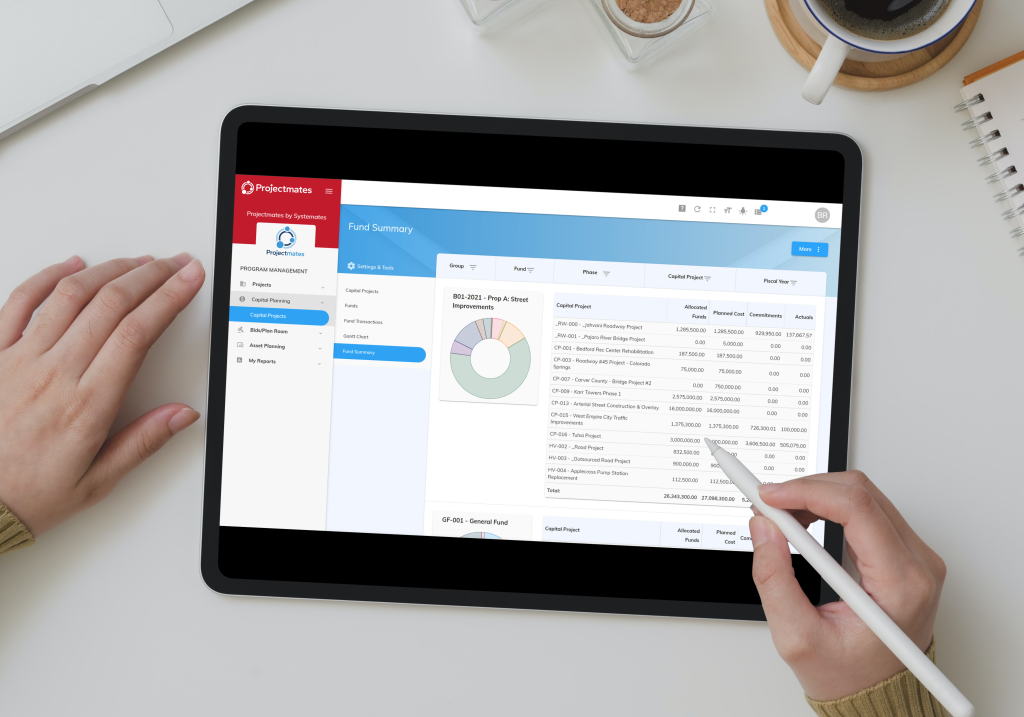
Projectmates provides a single source of truth for all construction and financial documents. You can:
- Track all cost and funding changes in one place
- Customize interactive dashboards to display the KPIs that matter most
- Keep budgets up to date, organized, and audit-ready
This saves time, reduces frustration, and ensures every decision is backed by accurate data.
Case Study: Tarrant County College Modernizes a $825 Million Bond Program

Before switching to Projectmates, the facilities administration team at Tarrant County College was tracking down construction documents in multiple locations. Their legacy software couldn’t deliver detailed reporting.
Now, they manage their seven-year, $825 million bond program with full visibility and seamless collaboration. All their capital improvement project data lives in one place, making it easier to track budgets, commitments, and funding sources.
Prioritize the Right Projects with Data-Driven Ranking
Better data leads to better decisions. Projectmates’ project ranking tool lets you evaluate project requests against your organization’s criteria — environmental, economic, regulatory, and more.
You can track every allocation, commitment, and actual in real-time for the clearest picture of how your construction program’s budget is performing. Even narrow down fund sources by phase, project, fiscal year, and more for increased clarity.
No more guessing whether a project should be funded now, postponed, or dropped entirely. You get clear, data-backed prioritization.
Case Study: City of Newport News Gains Efficiency and Morale

The City of Newport News, Virginia used to manage its capital improvement program with a patchwork of disconnected software. Staff wasted time chasing financial reports and digging through paper files.
With Projectmates, they can rank projects, track statuses in real time, and learn from past results. According to the city’s Director of Engineering:
“The team was thrilled that we upgraded to, what we saw, as a state-of-the-art system. We had their buy-in and I’d say it even improved morale.”
Plan for the Future with “What-If” Budget Scenarios
Projectmates can’t predict the future, but it can prepare you for it.
Running budget escalation scenarios shows how projects could look months or years down the road. Combine these forecasts with past project data, and you can accurately plan for cost fluctuations.
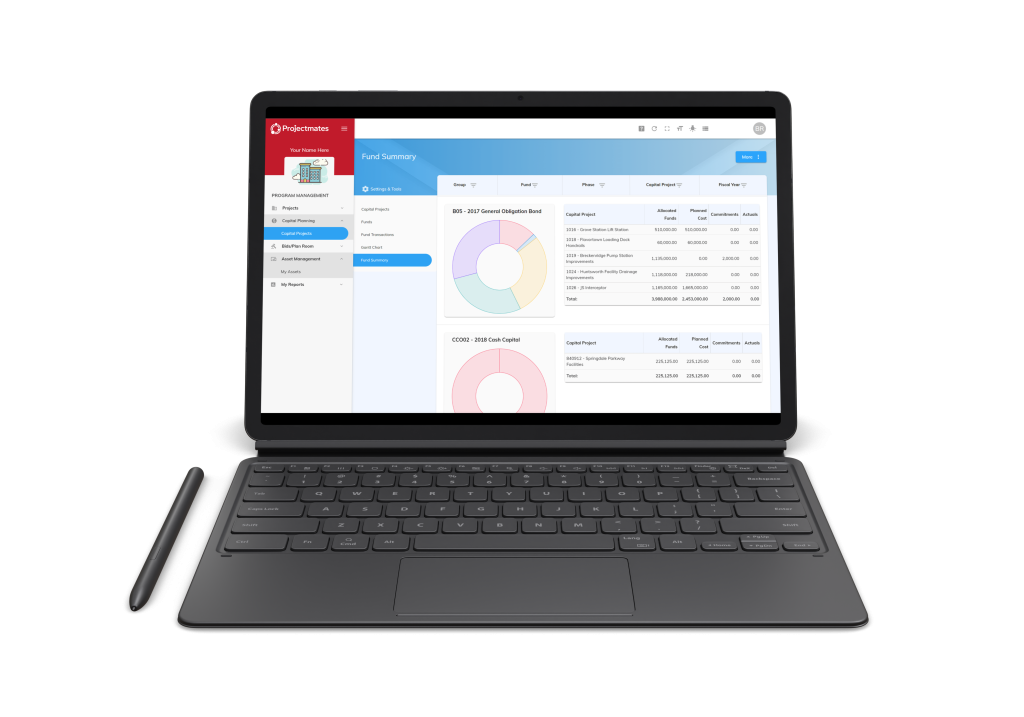
Built-in Capital Planning tools help you achieve more:
- Gantt chart scheduling for active and planned projects
- Fund summary reports to see every allocation in one view
help you spot issues early and keep projects on track.
Case Study: UT Southwestern Medical Center Streamlines a $1.1B Construction Plan

Facing a six-year, $1.1 billion construction plan, UT Southwestern Medical Center needed a capital planning platform that integrated with their existing systems and was easy for their team to use.
“We wanted something that would streamline the entire process and speak with our current software suite,” said project control manager Sandra Gant. “We also wanted something more user-friendly. That was the main reason we decided to go with Projectmates.”
Now, with multiple facilities in the pipeline and strict regulatory requirements, they use Projectmates to monitor construction progress and pivot when needed.
Start Capital Planning Early to Save Money and Reduce Risk
A busted budget can break a project and even derail an entire construction program. Too often, program managers focus on cost reconciliation at the end instead of budget planning and analysis at the start.
By using Projectmates’ capital planning tools from day one, you can control costs, improve decision-making, and keep your program moving forward without last-minute surprises.
Frequently Asked Questions About Capital Planning Tools
Capital planning tools help construction program managers plan, budget, and prioritize projects. They centralize funding data, track costs in real time, and provide reporting features to improve decision-making.
By offering real-time budget tracking, “what-if” scenario planning, and centralized document storage, capital planning software ensures you have accurate data to make proactive adjustments before issues escalate.
Real-time data allows program managers to see the current status of budgets, commitments, and funding allocations instantly, helping them respond quickly to changes and avoid delays.
Owners, program managers, and facilities teams in public agencies, higher education, healthcare, and private organizations use these tools to manage multi-year, multi-million-dollar construction programs.