In construction, a strong contract and a well-structured budget are often seen as the Owner’s primary defense against risk. But financial and contractual exposures rarely show themselves upfront. Inflation shocks, ambiguous clauses, and execution gaps can unravel even a solid-looking agreement. And just because a contract assigns a risk to the contractor doesn’t mean it won’t come back around.
This article is part 2 of our Proactive Risk Management for Construction Owners series. (Read Part 1 Here) It explores financial risks that can emerge across different phases of construction, often slipping past standard reviews, the contract terms that need sharper scrutiny, and how Owners can stop shifting risk and start managing it smarter with strong contract strategies.
What Are Hidden Financial Risks That Can Blow Up a Construction Budget?
Even when Owners believe they’ve built conservative, buffered budgets, hidden exposures can quietly pile up. These risks don’t just come from overruns; they often start with bad timing, shaky assumptions, or market forces no one tested until it was too late.
Inflation Drift
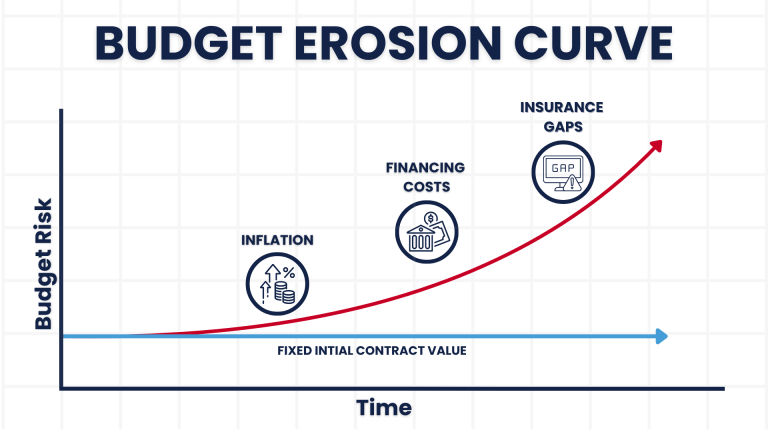
Most projects include contingency for inflation, but not all escalation clauses work the same way. Procurement delays and schedule slips can push purchases into new pricing cycles. Global commodity swings, trade policy shifts, and regional labor volatility all create sudden spikes, especially in materials like steel, concrete additives, or electrical gear.
Insurance Gaps
Many Owners assume the GC’s insurance has them covered. But policy caps, exclusions, or outdated valuations can leave major holes. Builder’s risk coverage often doesn’t reflect rising costs after the contract award. Overlapping scopes or off-site storage can also create coverage gaps that lead to finger-pointing when something goes wrong.
Financing Triggers
When financing ties directly to milestones, schedule delays can choke off funds. That leads to bridge loans, strained cash flow, or forced acceleration. Variable-rate loans quietly eat into budget headroom the longer a project drags on.
Key Financial Risks Construction Owners Should Watch For:
- Escalation clauses without clear triggers
- Insurance gaps and outdated valuations
- Financing tied to tight milestones or variable rates
- Change orders from vague early scope
- Contractor default or bond failure
Example: What Happened With Hinkley Point C Nuclear Plant? (UK)
Despite backing from major sponsors and a contract-for-difference structure, the Hinkley Point C project ran into massive cost escalation. A complex financing model, changes in UK nuclear regulation, and construction delays pushed costs from £18 billion to over £30 billion.
What Risky Construction Contract Clauses Deserve a Closer Look?
Some contract clauses look protective on paper but create exposure when pressure hits, especially if they’re vague, outdated, or poorly enforced.
Escalation Clauses with Undefined Triggers
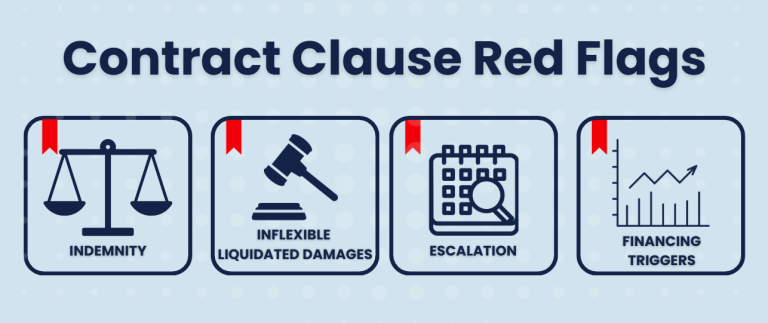
When escalation clauses don’t tie to clear thresholds or indices, no one knows when they apply. Contractors and Owners often clash over what counts as “extraordinary” inflation. The result? Procurement delays, change order fights, and mounting costs.
Broad Indemnity Language
Overly broad indemnity clauses can make Owners responsible for third-party damages, even when they didn’t cause the issue. Narrowing the language to “negligence caused by the indemnifying party” can keep the burden in the right place.
Ambiguous “Changes in Law” Clauses
Regulations change constantly, especially on multi-year projects. If your contract doesn’t define what counts as a change or who pays when it happens, guess who ends up footing the bill?
Inflexible Liquidated Damages
Flat per-day penalties often don’t match the real cost of a delay. If you miss a funding draw or lose stakeholder trust, your actual losses may be nonlinear. At the same time, overly aggressive LDs can create tension, cut corners, or stall collaboration.

Example: What happened with Berlin Brandenburg Airport? (Germany)
The airport’s 10-year delay and €4+ billion in overruns came from major contract gaps. Overlapping scopes, unclear roles in MEP coordination, and fuzzy quality control language led to legal disputes and drained contingency funds.
What Are Risks Construction Owners Can’t Fully Transfer, Even With a Contract?
You can’t assume risk transfer equals risk removal. Real-world conditions tend to bend contracts, and when they do, that “assigned” risk often snaps back.
Change Orders from Poor Scope Definition
If early designs lack detail, contractors may bid low and stack change orders later. Even fixed-price contracts can bleed through scope drift if no one locked down the baseline early enough. Owners need visibility into construction progress to prevent surprises tied to scope changes or delays.
Escalation Fallout from Schedule Slips
Escalation clauses can’t help if the GC delays procurement past the lock-in date. When prices jump outside the clause window, Owners face two choices: eat the cost or go back to market.
Contractor Insolvency or Bond Failure
Even big contractors can hit financial trouble in today’s volatile markets. If a sub walks and the bonding process stalls, the Owner risks losing control of the schedule and eating re-procurement costs.
What Strategic Questions Can I ask to Evaluate Contract and Financial Risk?
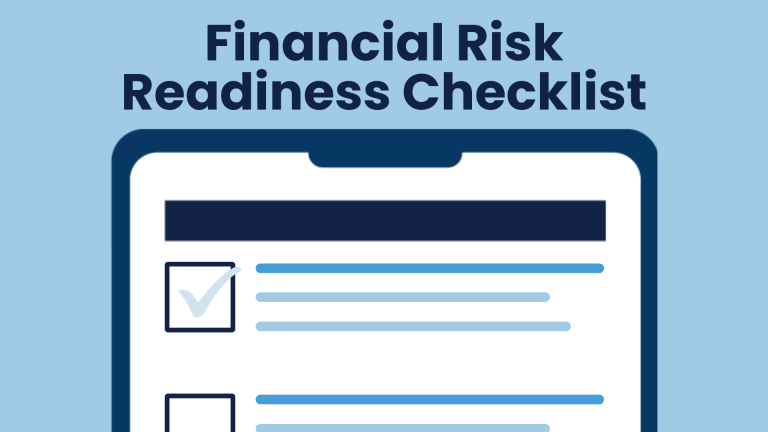
Use these questions to assess where you stand:
- Do escalation clauses tie to clear indices (e.g., ENR or PPI)?
- Do our timing assumptions actually match procurement reality?
- Have we updated insurance coverage to reflect the project’s current value?
- Do indemnity and “change in law” clauses clearly assign responsibility?
- Have we stress-tested our financing model for inflation or delay?
- Does our change order process give Owners final cost control?
Smart Contracts Still Need Smarter Management
You don’t need a perfect contract—you need to manage an imperfect one wisely. Even the cleanest agreement creates exposure when the project reality shifts. That’s why Owners must treat contract and budget management as active, not static.
Review contract terms. Model financial shifts. Tighten the change order process. These moves let you spot issues early, before they become budget blowups. The best contracts don’t just shield you from risk. They also signal when something’s about to go wrong.
In the next post of this series we’ll discuss schedule risk. Because when timelines slip, every other risk gets more expensive.
Frequently Asked Questions About Financial Risks
Cost escalation, insurance gaps, financing tied to milestones, and vague contract terms all create financial exposure, often in ways that don’t show up until mid-project.
Clarify escalation triggers, indemnity language, and change-in-law clauses. Update insurance coverage regularly and stress-test your financing model before construction starts.
No. Even when contracts assign risk to the contractor, things like scope gaps, market volatility, or execution failure can push that risk back onto the Owner.
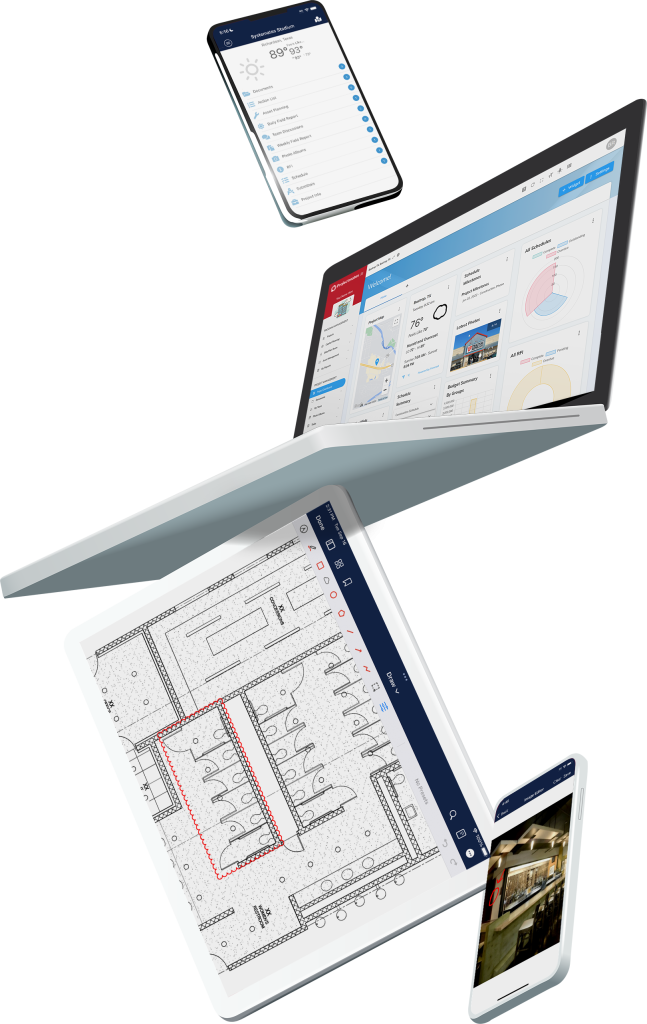
The Projectmates construction software platform gives Owners real-time budget visibility, so they can catch cost drift early, before it turns into a budget overrun. With built-in forecasting, escalation tracking, and audit-ready documentation, teams can model financial impacts and adjust proactively. A secure construction cloud infrastructure, Projectmates keeps every team aligned through connected construction workflows that prevent silos and delays.