Capital planning is where some of the most important construction decisions get made. What to build. How to fund it. How to line up priorities across departments that do not always see the world the same way. When your tools are outdated or scattered, the whole process becomes a guessing game that Owners cannot afford.
Our latest webinar brought together Projectmates Vice President Marcus Bliss, PMP, CSM, CMIT, Senior Project Manager Jamie Rogers, and Administrator of Fiscal Operations, Will Rose, from the City of Newport News, VA. They broke down what it really takes to run a capital improvement program without drowning in spreadsheets or missing critical context during decision-making.
Why Owners Need More Than Project Tracking
Many Owners begin their capital planning journey with a simple question: what kind of construction software actually works for an Owner team?
It’s a fair question.
There is a big difference between tools designed for general contractors and tools designed for Owners. GC software focuses on daily jobsite coordination. Owner-focused software supports long-range planning, funding visibility, document control, forecasting, and full program oversight. Those needs shape everything from budget decisions to facilities handover, and they cannot be met by a tool built for a different audience.
This is why so many Owners eventually start looking for an alternative to GC tools. They need something purpose-built for the work they do across planning, execution, and long-term asset management.
Two Patterns That Slow Capital Planning
Throughout the webinar, two Owner profiles kept coming up.
The Over Tooler
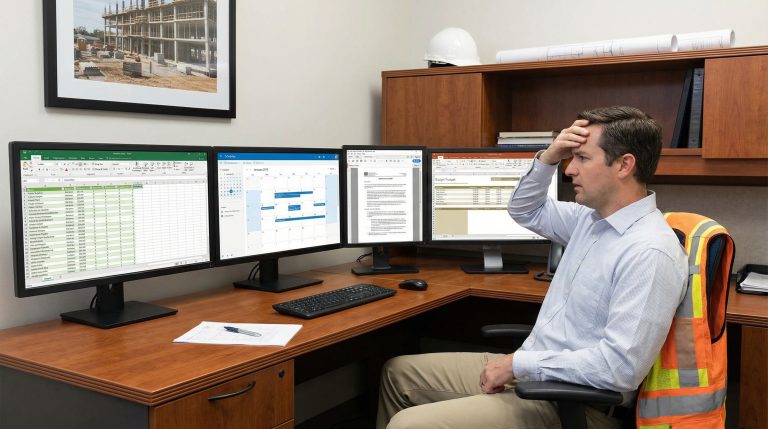
This group has a pile of disconnected apps. Schedules in one place. Budgets somewhere else. Documents scattered across drives. Five versions of the same spreadsheet. Nothing connects, so leadership never gets a true view of their capital program.
The Tech Hesitant
This group is cautious, often for good reason. Maybe past implementations failed, or the team worries they do not have the time or staffing to learn something new. They stick with what they know, even when what they know makes everything slower.

Both groups end up asking the same questions.
- How do we improve visibility into our capital projects?
- How do we track budgets and forecasts accurately?
- How do we standardize workflows across departments?
The answer is not more software. It is one structured foundation.
A Look Inside Newport News’ Capital Program

Newport News manages hundreds of projects across buildings, roads, stormwater, wastewater, and transportation. Their capital improvement plan involves hundreds of participants and takes eight months every year to complete. Before moving to a centralized PMIS, everything lived in spreadsheets.
That came with predictable issues.
- Narratives went missing.
- Funding history disappeared.
- Context ended up buried in email threads.
- No one could see the full picture at the same time.
Once they moved into an integrated system, collaboration looked very different. The budget department, finance team, PMs, engineers, fire, police, and communications staff all accessed the same record with the same data. Conversations moved faster because everyone started from the same source of truth.
The Capabilities Owners Actually Need
Several themes emerged in the conversation. Not as buzzwords. Not as features. Just as the things that consistently make or break a capital program.

Clear, live budget visibility
Owners need to know what is planned, what is encumbered, what is committed, and what remains available. Without that, even a small change order becomes a risk. Will explained that once his project managers could see their budget inside the capital planning tool, they stopped relying on finance for every funding question. That alone reduced delays and schedule risk.
Reliable tools for managing risk
Risk does not start in construction. It starts in planning. Ranking criteria, consistent data structures, funding workflows, and cross-department approvals all play a role in surfacing risks early, instead of letting them show up during delivery.
An accurate long-term view
Capital plans shift. Prices rise. Priorities change. Owners need snapshots, side-by-side comparisons, and escalation scenarios. Without them, it is impossible to understand how one adjustment affects the entire program. Spreadsheets cannot keep up with that level of movement.
Support for public sector needs
Public agencies have unique requirements. Multiple funding sources. Grant tracking. Audit trails. Detailed breakdowns by phase. Will’s team manages more than forty funds with strict reporting requirements, and he noted that a centralized system made those reviews significantly faster and clearer.
A way to carry institutional knowledge forward
With retirements accelerating across the industry, more Owners are thinking about how to keep knowledge from walking out the door. When histories, narratives, decisions, and documents are stored in one place, that knowledge becomes searchable and reusable instead of vanishing when someone leaves.
Why Document Management and Closeout Should Start in Planning
Owners often ask how to speed up construction closeout or what documents matter most. The simple truth is that closeout moves faster when the right documents are captured early. That means planning teams, design teams, and construction teams all contribute to the same structure from the beginning. This prevents the scramble at the end and gives facilities teams the clean handover data they need for operations.
Capital Planning Needs a Single Foundation, Not More Tools

Marcus closed the webinar with a reminder that many Owners already feel instinctively. The problem is not the number of tools. It is the lack of structure.
A solid capital planning platform connects requests, rankings, funding, project execution, contracts, documents, and reporting. It keeps the data clean and the process consistent. And it lets teams make decisions with confidence instead of guesswork.
Owners do not need more technology. They need a system that supports the way they already think.
Frequently Asked Questions (FAQ)
Capital planning tools help construction program managers plan, budget, and prioritize projects. They centralize funding data, track costs in real time, and provide reporting features to improve decision-making.
By offering real-time budget tracking, “what-if” scenario planning, and centralized document storage, capital planning software ensures you have accurate data to make proactive adjustments before issues escalate.
Real-time data allows program managers to see the current status of budgets, commitments, and funding allocations instantly, helping them respond quickly to changes and avoid delays.
Owners, program managers, and facilities teams in public agencies, higher education, healthcare, and private organizations use these tools to manage multi-year, multi-million-dollar construction programs.