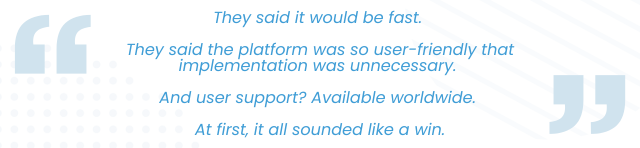
A promise that the platform is plug-and-play. An offer that skips past the heavy lifting. And a hope that this time, it’s all going to work out.
We’ve heard this story before. A lot.
It’s appealing, especially when internal teams are stretched thin and everyone just wants to make a decision and get moving.
But that’s the trap.
The rollout appears quick. The software looks slick. Everyone breathes a sigh of relief, until they try to use it. And that’s when the cracks start to show.
The Slow Unraveling After a Fast Decision
At first, there’s momentum. The contract gets signed. Admins get credentials. A welcome email lands in someone’s inbox.
And then… nothing.
No real discovery conversation. No in-depth look at how your team works. No guidance on how to configure workflows to fit your existing processes, let alone how to improve them.
Instead, the platform gets dropped into your lap like an IKEA box without an Allen wrench. Maybe there’s a video or two. A help site. A vague promise that “support is always available.”
But the thing is, support isn’t the same as implementation.

Answering questions isn’t building a plan, and giving someone access to software doesn’t magically make them want to use it. This is especially true in construction, where time is tight, responsibilities are high-stakes, and no one has the bandwidth to “just figure it out.”
That’s how it starts. A quiet handoff. A few unanswered questions. A growing sense of confusion. And then, eventually, the software fades into the background: unused, unappreciated, and unadopted.
The Real Risk Isn’t Choosing the Wrong Construction Software
When construction teams talk about software ROI, the conversation usually revolves around features. Does it do X? Does it integrate with Y? Can it build reports? Can it customize workflows?
All fair questions.
But here’s the harder one: Will your team actually use it?
Because adoption is the real hurdle, not capability. You can buy the most powerful platform on the market, but if people aren’t trained, processes aren’t aligned, users don’t trust it, and the value or benefit isn’t clear to them, it’s just another line item collecting dust.
This is the part most teams underestimate.
Software doesn’t fail because it’s missing a niche dashboard.
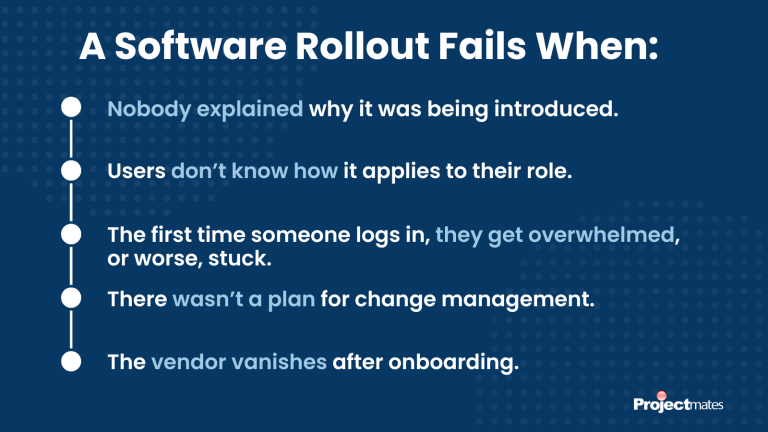
So, what happens next?
People go back to what they know. Spreadsheets. Email. Disconnected tools. The problems the platform was supposed to solve are still there, and now you’re left justifying why the investment in construction software didn’t pay off.
Implementation Is the Investment That Pays for Everything Else
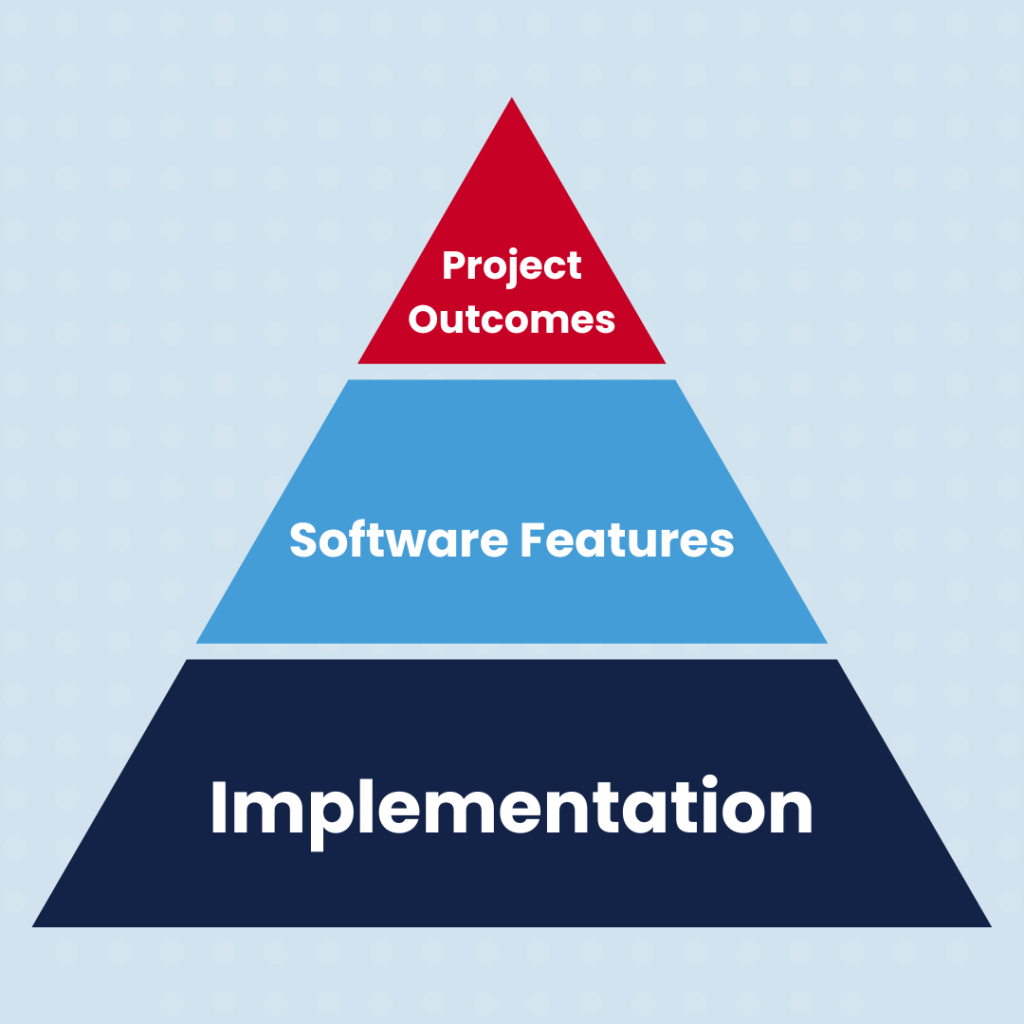
There’s a tendency to treat implementation like a hurdle. Something to “get through” on the way to results. But the truth is, implementation is a critical part of the investment—it’s the foundation that determines whether your software will ever deliver real value.
That doesn’t mean it has to be long or complicated. But it does need to be thoughtful, strategic, and purpose-built for how your team actually operates.
That kind of implementation starts with listening. Before anyone builds a workflow or sets up permissions, there should be a conversation about how your team tracks projects, how your approvals work, who needs visibility into what, and where things tend to fall apart on projects.
From there, the rollout plan should be tailored, not copied and pasted. Users should leave training feeling confident, and your team should walk away from the software launch knowing they’re supported. Not just by a ticketing system managed halfway across the globe, but by a local support staff who understand your business.
How the Fast Track Often Leads to a Dead End
We don’t share all this to scare you. It’s simply pattern recognition.
In fact, Gartner estimates that up to 70% of software implementations fail due to poor adoption.
Organizations often choose platforms based on features, only to realize that features themselves don’t solve problems.
People and processes do.
They prioritize speed over strategy, and end up with software no one uses. Or worse, software that is used incorrectly, creating more confusion and inefficiency instead of solving the problems it was meant to address.
And when that happens, they don’t just lose time. They lose trust. The next time you try to introduce new software, the resistance is higher, the enthusiasm is lower, and the cost to turn things around is steeper.
That’s why we approach implementation differently. We believe the real win isn’t getting the software, it’s seeing your team still using the system five years from now.
We want to see your team using the software consistently, because confidence follows consistency.
Questions to Ask Before You Buy
If you’re in the middle of a construction software buying decision or about to sign on the dotted line, there’s still time to get this right. Forget the glossy demos and the vague promises of “unlimited support.”
Instead, ask the questions that actually predict success:
- Who’s responsible for helping us roll this out?
- Are you going to take the time to understand how our team works?
- How will you help us drive adoption, not just launch the platform?
- What happens after implementation, when the real work starts?
If a software vendor can’t answer those clearly, chances are, you’re about to be handed off. Fast.

Final Thought: If It Feels Too Easy, It Probably Is
We all love a good shortcut. But in construction, and especially in construction software, skipping the “hard” parts just means they’ll come back later, only bigger, messier, and harder to fix.
Implementation might not be flashy. It might not be the slide that gets all the applause in the pitch deck. But it’s the foundation everything else rests on.
So before you fall for the promise of a quick win, ask yourself:
Are we setting this software up for long-term success?
Because if not, you’ll just be switching problems, not solving them.
Frequently Asked Questions About Software Implementations
Rushed implementations typically lack thorough planning, stakeholder engagement, and adequate training. This oversight can lead to poor user adoption, data inconsistencies, and integration issues, ultimately compromising the system’s effectiveness and ROI.
Beyond the initial investment, hidden costs can include:
Rework and troubleshooting: Addressing issues that arise from inadequate setup.
Training expenses: Additional sessions needed due to initial oversight.
Operational disruptions: Downtime or inefficiencies during the transition period.
User resistance: Low adoption rates leading to underutilization of the system.
Projectmates emphasizes a structured implementation process that includes:
Dedicated internal teams: Experienced professionals guide the setup.
Stakeholder involvement: Ensuring all voices are heard and needs are met.
Validation workshops: Refining workflows to align with organizational processes.
Comprehensive training: Empowering users for effective system utilization.
Yes. A poorly executed implementation can lead to ongoing challenges, such as inconsistent data, inefficient workflows, and diminished trust in the system. These issues can hinder project success and organizational efficiency over time.
Allocate sufficient time: Ensure the implementation timeline allows for thorough planning and testing.
Engage stakeholders early: Gather input from all relevant parties to tailor the system effectively.
Invest in training: Equip users with the knowledge to utilize the system fully.
Choose the right partner: Select a provider like Projectmates that offers structured and supportive implementation services.