In construction, time isn’t just money. It’s also reputation, financing, and stakeholder trust.
A well-crafted schedule often becomes the owner’s lens into project progress but schedules themselves can be fragile. Hidden assumptions, supply volatility, and outdated scheduling methods can turn neat-looking timelines into moving targets. For owners, proactive schedule risk management means going beyond float and critical path monitoring to anticipate how delays cascade, and to intervene before they spiral.
This article is part 3 of our Proactive Risk Management for Construction Owners series. (Read Part 2 here.) It focuses on schedule risk: the most visible and often most underestimated threat to project success. From eroding buffers to human bottlenecks, we look at how delays cascade across budgets, financing, and stakeholder confidence, and what Owners can do to stay ahead.
Why Schedule Buffers Fail in Construction Projects
Most schedules include float or built-in buffers, but these are only as reliable as the assumptions underneath them. Buffers often erode silently when:
- Hidden dependencies exist across trades or phases that were not fully mapped.
- Permitting and inspection timelines slip, eating into contingency days without visibility.
- Long-lead procurement runs into global supply issues, pushing delivery into critical phases.

How Supply Chain Disruptions Derail Construction Schedules
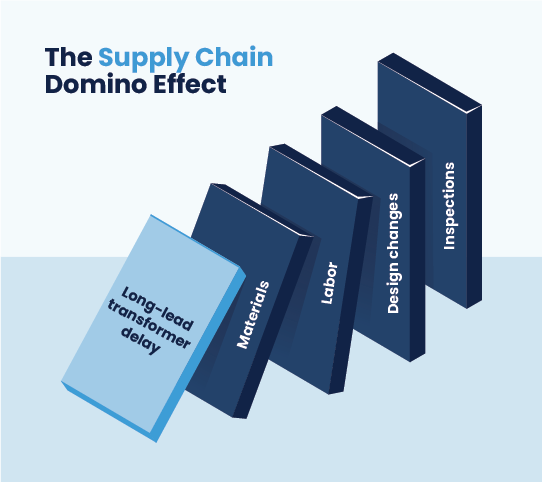
Material availability and labor access are no longer just procurement issues; they are schedule risks in disguise. Owners who assume the contractor alone manages these exposures often discover too late that cascading effects hit timelines directly.
- Labor shortages in specialized trades can force resequencing, disrupting the entire critical path.
- Global material delays (steel, transformers, semiconductors) can stall major milestones, especially when alternatives require design revisions.
- Adjacent project conflicts for subcontractors can create competition for crews, causing bottlenecks.
Example:
The California High-Speed Rail project has faced repeated delays, not just from land acquisition and permitting, but from difficulties sourcing critical materials and aligning trade availability across a stretched labor market.
Beyond CPM: The Future of Construction Scheduling and Risk Forecasting
The Critical Path Method (CPM) has long been the industry standard, but it has limits in dynamic, uncertain environments. Emerging methods and technologies offer owners better foresight:
- Monte Carlo simulations run thousands of “what-if” schedule scenarios, showing probability ranges instead of single-point dates.
- Machine learning models can forecast delay risks by analyzing weather, resource trends, and supply volatility. Some studies show predictive models reduce schedule overruns by up to 18 percent compared to CPM alone.
- Connected field data from IoT and project management platforms allow near real-time adjustments, replacing static updates with adaptive scheduling.

The Human Side of Schedule Risk in Construction Projects
Even the most sophisticated tools cannot fully capture the human dimension of scheduling. Owners who focus only on data and software often overlook the practical realities of coordination, communication, and decision-making. Many schedule overruns trace back not to flawed CPM logic, but to how people interact with the plan.
- Decision-making bottlenecks. When approvals pile up at the owner or design consultant’s desk, weeks can be lost, even if field productivity is strong.
- Trade stacking. Overlapping trades in the same physical space can cause out-of-sequence work or rework, which doesn’t always show up in high-level CPM reports.
- Change communication. If design changes are not rapidly fed into the master schedule, the critical path becomes outdated, creating a false sense of security.
- Stakeholder misalignment. On large infrastructure projects, differing expectations across public agencies, lenders, and private developers can stall key milestones.
Example:
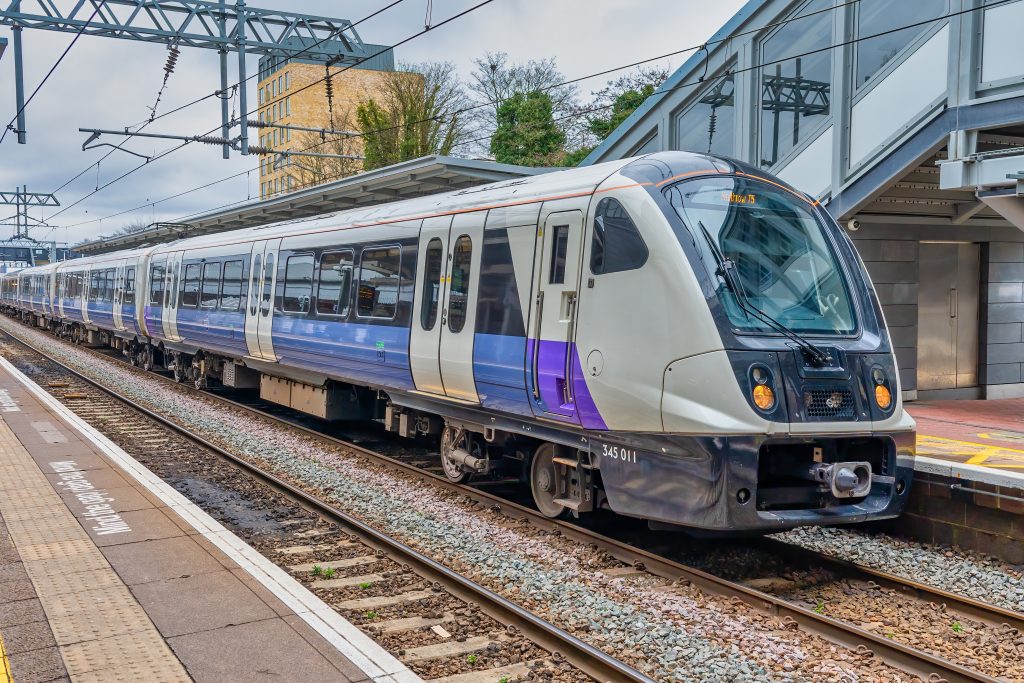
London’s Crossrail (Elizabeth Line) project experienced significant schedule overruns due in part to coordination breakdowns between contractors and systems integrators. While technical work advanced, incomplete communication of design changes and approval processes delayed integration testing and opening.
Actionable Schedule Risk Strategies for Construction Owners
Owners don’t need to master every scheduling algorithm, but they do need to push for stronger practices and visibility:
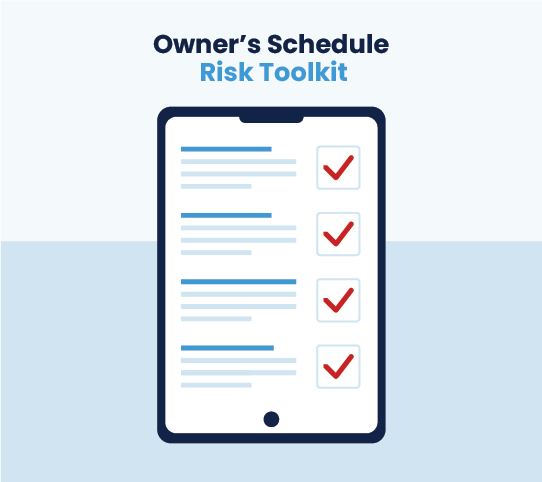
- Require contractors to run schedule risk analyses at key milestones, not just progress updates.
- Tie procurement tracking directly to schedule reporting, so material risk isn’t hidden until it’s too late.
- Stress-test financing and stakeholder communications against schedule slippage scenarios.
- Encourage collaborative planning workshops that map inter-trade dependencies, not just task durations.
Why Time Is the Biggest Risk Multiplier in Construction Projects
Schedule risks amplify every other risk. A delay in one trade can balloon costs, financing, and even reputational stakes. For owners, proactive scheduling isn’t about eliminating uncertainty, it’s about illuminating it early, testing scenarios, and building resilience into project delivery.
By moving beyond the critical path and demanding smarter, data-driven approaches, owners can protect not just timelines, but the stability of their entire investment.
Frequently Asked Questions(FAQ):
Buffers or float are meant to absorb small setbacks, but they often erode quietly. Hidden trade dependencies, shifting inspection timelines, or long-lead procurement issues can consume that “extra time” before anyone notices. Once those buffers are gone, even a minor delay can derail the entire schedule.
Owners are moving toward more predictive approaches like Monte Carlo simulations and machine learning–based forecasting. These methods test thousands of “what-if” scenarios to calculate the probability of meeting deadlines rather than relying on a single date from CPM. It’s a more realistic way to plan amid uncertainty.
Owners should require contractors to run schedule risk analyses at key milestones, not just during updates. Linking procurement tracking to the schedule, stress-testing financing scenarios, and holding collaborative planning sessions with all trades can prevent cascading issues before they start.
Projectmates gives Owners real-time visibility across schedules, budgets, and procurement data in one place. That means potential risks — like delayed bids, change orders, or long-lead items — show up before they impact the timeline. It’s not just tracking progress; it’s seeing pressure points early enough to act.
Projectmates integrates scheduling with budgeting and reporting tools that update in real time. When scope changes or delays occur, the system automatically recalculates financial impact and timeline adjustments, helping Owners forecast with data that actually reflects reality — not last month’s assumptions.