Most public construction teams don’t fail because of design flaws or engineering errors. They fail on documentation.
Funding delays, clawbacks, and even stalled projects are often the result of missing documentation, inconsistent reporting, or data scattered across disconnected systems. In an era where every tax dollar has to be defended, the real foundation of a successful program is accountability. And accountability requires more than spreadsheets.
The challenge is clear: every project decision must be documented, every dollar should be traceable, and every report will be defensible. But many agencies are still trying to do this with spreadsheets, siloed tools, or outdated systems. That’s not just inefficient, it’s risky.
The answer isn’t another workaround.
It’s a shift to centralized construction management.
What Accountability Really Means in Public Projects
Accountability isn’t just about surviving an audit. In the context of public works, it means:
- Traceability of funds — knowing exactly which dollars went where, and being able to prove it.
- Documented decision-making — clear records of who approved what, when, and why.
- Transparent reporting — financial and project updates that stakeholders can understand quickly.
When those requirements aren’t met, agencies risk delayed funding disbursements, clawbacks, or reputational damage. In some cases, the lack of reliable documentation has led to projects stalling midstream. Not because of technical issues, but because the funding trail wasn’t clear.

Case Study — Newport News
The City of Newport News was juggling $500M worth of capital improvements across multiple departments. Staff were burning time (and taxpayer dollars) chasing down reports in paper files and reconciling errors from disjointed systems. After moving to Projectmates:
- Financial reports became instantly accessible
- Bid processes went fully digital
- Documentation became reliable enough to withstand federal scrutiny
The Role of a Centralized Construction Management System
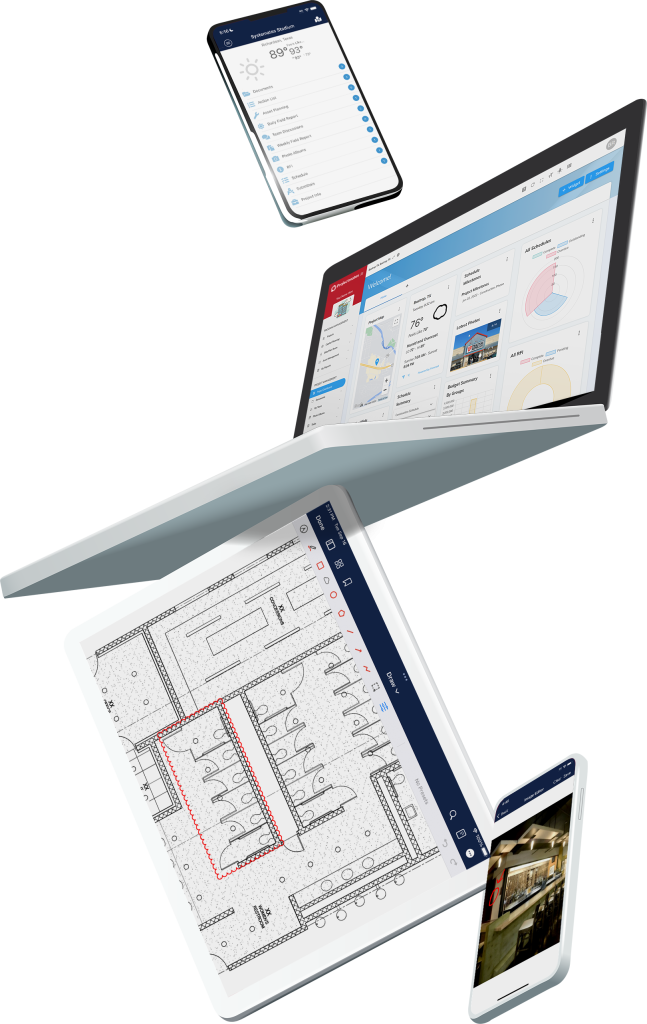
A centralized management system, often called a PMIS (Project Management Information System), provides a single environment to manage budgets, contracts, documents, and workflows. Instead of scattering information across emails, folders, and spreadsheets, everything is connected.
Financial Oversight
The backbone of accountability is financial visibility. A centralized system ties commitments and payments directly to funding sources, so it’s clear where every dollar originated and how it was spent. Real-time budget tracking makes it possible to forecast cost overruns before they happen and to demonstrate responsible stewardship of funds when oversight bodies ask for proof.
Document Control
Strong governance depends on reliable records. A centralized platform stores contracts, change orders, RFIs, and pay applications in one environment, with a time-stamped audit trail attached to each document. When an auditor or finance director asks who approved a change and why, the answer isn’t buried in an email chain, it’s immediately accessible in the system.
Transparency Tools
Accountability doesn’t mean much if leadership can’t see it. Dashboards and configurable reports in a centralized system make it easier to distill complex programs into clear, actionable views. Finance teams get uniform data across departments, reducing the errors and duplication that plague spreadsheet-based programs. The result is faster, more accurate reporting that builds trust both internally and with the public.
Workflow Automation
Even the most well-intentioned processes fall short if they rely on manual compliance. Automated workflows enforce policy by design, ensuring the right approvals happen in the right order. Notifications and reminders keep projects moving, while standardized steps reduce the risk of skipped documentation or informal workarounds. In practice, this means compliance becomes the default.
Moving From Oversight to Confidence
A centralized system doesn’t just help agencies “pass the test” of compliance. It shifts accountability from a reactive burden into a proactive strength. When leadership can access real-time dashboards, finance can trace every dollar, and auditors can follow a complete digital paper trail, the conversation changes.
Instead of scrambling to respond to oversight requests, agencies can share progress reports with confidence — showing not only how funds are being used, but how well programs are being managed.

Case Study — Texas Military Department
With 100+ facilities under its watch, the Texas Military Department needed real-time visibility and airtight accountability. Spreadsheets and manual reporting weren’t cutting it. By adopting Projectmates, TMD gained:
- A single source of truth for budgets, contracts, and schedules
- Custom dashboards with real-time funding oversight
- Automated workflows that created built-in accountability at every level
Building a Foundation for Public Trust
Technology won’t replace good governance. But without it, good governance is almost impossible to maintain at scale. A centralized system ensures accountability is consistent, transparent, and defensible across every project, every department, and every funding source.
When accountability becomes seamless, agencies don’t just avoid compliance issues. They reinforce the confidence of their leadership, their auditors, and their communities. That confidence is as valuable to a capital program as any project milestone or ribbon-cutting.
Frequently Asked Questions (FAQ)
Public capital projects are funded by taxpayer dollars and often tied to federal programs like ARP or IIJA. That means every decision, dollar, and document is subject to oversight. Without clear records, agencies risk delayed disbursements, funding clawbacks, and a loss of public confidence.
A Project Management Information System (PMIS) creates a single source of truth for budgets, contracts, approvals, and reports. Because every action is logged with an audit trail, agencies can quickly show auditors exactly how funds were spent and who approved each step.
Unlike spreadsheets, which are prone to errors and version confusion, a centralized system ties funding, documents, and workflows together in one environment. That makes it easier to track budgets in real time, reduce duplication, and ensure compliance with policies.
Projectmates is a cloud-based PMIS designed with public sector needs in mind. Agencies use it to connect budgets, contracts, and documents in one place while maintaining time-stamped audit trails. Case studies from cities and state agencies show how Projectmates helps teams meet compliance requirements and strengthen transparency.
No. Strong governance is still the foundation of accountability. What software does is enforce those policies consistently across every project and department. Automated workflows, audit trails, and dashboards make it possible to uphold governance at scale without overloading staff.