In a recent Construction Dive article, Andy Cushman, the director of business development and proposals at construction services firm Urban Engineers, argued that preconstruction needs to start before bids ever hit the table. He’s right. Too often, Owners only engage in serious preconstruction once the bid process begins, and by then, risk has already crept into budgets, schedules, and project expectations.
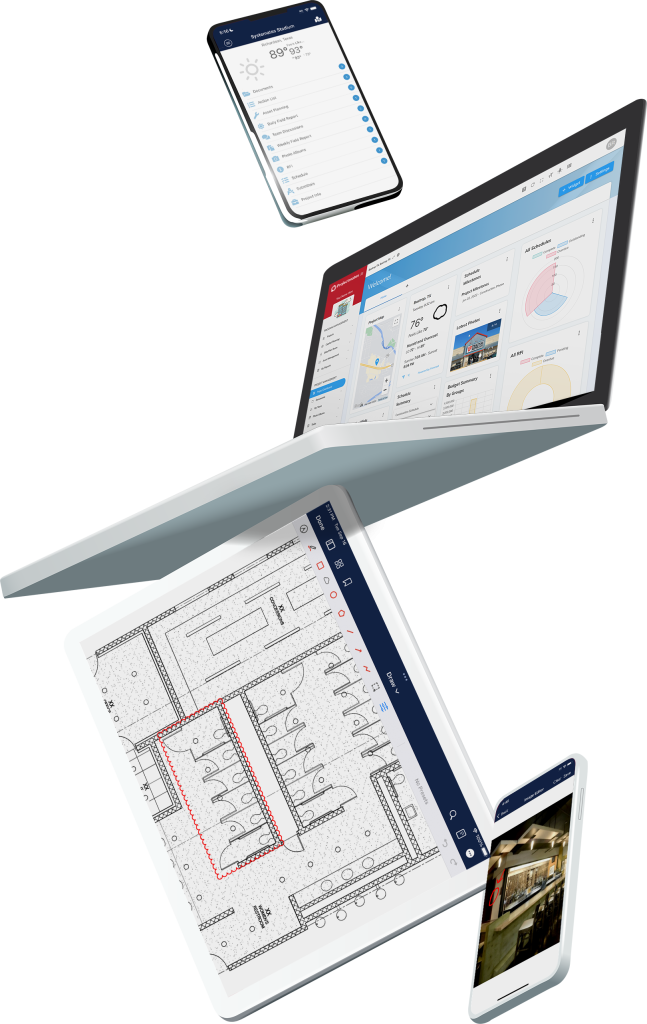
At Projectmates, we’ve seen the same pattern. The Owners who succeed in today’s volatile market are those who push preconstruction earlier, involve the right people, and centralize collaboration. Below, we break down six reasons why shifting preconstruction forward pays off and how a construction management platform like Projectmates makes it practical and easy.
1. Get Ahead of Risk Before It’s Locked In

Economic uncertainty, shifting tariffs, and supply chain volatility all make costs unpredictable. If you wait until bids are in, that volatility is already baked into the numbers. By starting preconstruction earlier, you can identify material risks, model alternatives, and plan for contingencies before committing to costs.
According to the Construction Industry Institute (CII), strong front-end planning correlates with 6–25% cost savings and 6–39% schedule improvements compared with weak planning.
How Projectmates helps get ahead of risk: Owners can track budgets in real time, run scenarios, and manage risks through a single, automated system.
2. Eliminate Guesswork in Bids

Ambiguous drawings and incomplete documents force bidders to guess. One contractor inflates pricing to cover unknowns; another underestimates and struggles later. Either way, Owners lose.
Research from North Carolina’s DOTs showed that constructability reviews before design completion lead to fewer RFIs and more accurate bids.
How Projectmates helps Eliminate Guesswork: Centralized document management ensures all stakeholders are working from the latest, vetted version. Markups, comments, and revisions happen in one place, creating true apples-to-apples bids.
3. Catch Problems Before They Become Change Orders

Change orders aren’t always “unforeseen.” Many stem from issues that could have been caught with early constructability reviews.
The Federal Highway Administration recommends value engineering and constructability reviews during 30–75% design, when changes are still cheap and effective.
How Projectmates helps catch problems: Standardized workflows for reviews, approvals, and risks help find inconsistencies before they cost Owners time and money.
4. Align Design With Real-World Constructability

Cushman points out the value of bringing in those who have actually built, staged, and maintained projects. Their insights keep designs grounded in reality.
The American Institute of Architects (AIA) has formalized this through C403-2021, which defines scopes for design-assist and preconstruction services to align design intent with buildability.
How Projectmates helps align design with real-world constructability: Projectmates makes it easy for design teams, contractors, and Owners to collaborate early in one environment. Issues like sequencing, staging, and long-term maintenance get addressed before the shovel hits the ground.
5. Scale Preconstruction Across Every Project

Early preconstruction isn’t only for billion-dollar infrastructure. Municipal facilities, nonprofit projects, and retail buildouts all benefit from early clarity and risk reduction.
FMI and the Design-Build Institute of America (DBIA) report that design-build’s growth is driven by early contractor involvement and BIM-based constructability reviews, which improve cost and schedule certainty.
How Projectmates helps scale preconstruction: Owners can templatize preconstruction tasks and reviews in Projectmates, applying best practices consistently across programs, whether it’s one project or hundreds.
6. Make Preconstruction a Repeatable Habit

It’s easy to agree with Cushman’s call. The harder part is making early preconstruction part of your standard operating procedure.
Dodge Construction Network and the Lean Construction Institute found that teams using Lean principles, like structured preconstruction, are far more likely to finish on time and on budget.
How Projectmates helps make preconstruction a repeatable habit: With budgets, schedules, and reviews tied together in one platform, early preconstruction becomes routine instead of aspirational. Owners have a repeatable system that reinforces discipline across every project.
In Closing:
Waiting until bids to start preconstruction is like building on shaky ground. Owners who shift the process earlier and back it with centralized tools create projects that are more predictable, more transparent, and far more successful.
Frequently Asked Questions About Preconstruction (FAQ)
Preconstruction planning is the process of preparing a project before construction begins. It includes budgeting, scheduling, constructability reviews, risk assessment, and stakeholder alignment.
Large-scale data from CII and DOT programs show that earlier planning results in fewer change orders, fewer RFIs, and tighter cost/schedule performance.
Most agencies recommend conducting them during 30–75% design completion to maximize impact while changes are still feasible.
Owners, architects, contractors, and stakeholders with field experience. AIA’s C403 framework clarifies how to scope and compensate these services so they are accountable and effective.
Yes. Studies on design-build and Lean approaches show improved cost and schedule predictability when early collaboration is embedded in the process.
By centralizing all documents, RFIs, addenda, and cost impacts, a system like Projectmates ensures all bidders are working from the same information, improving bid quality and reducing disputes.