Risk can be healthy if handled correctly
As an Owner, you know there are many risks that can derail your timeline, balloon your budget, or compromise quality. But what if you could turn the tables, using technology to transform risk from a looming threat into a manageable challenge?
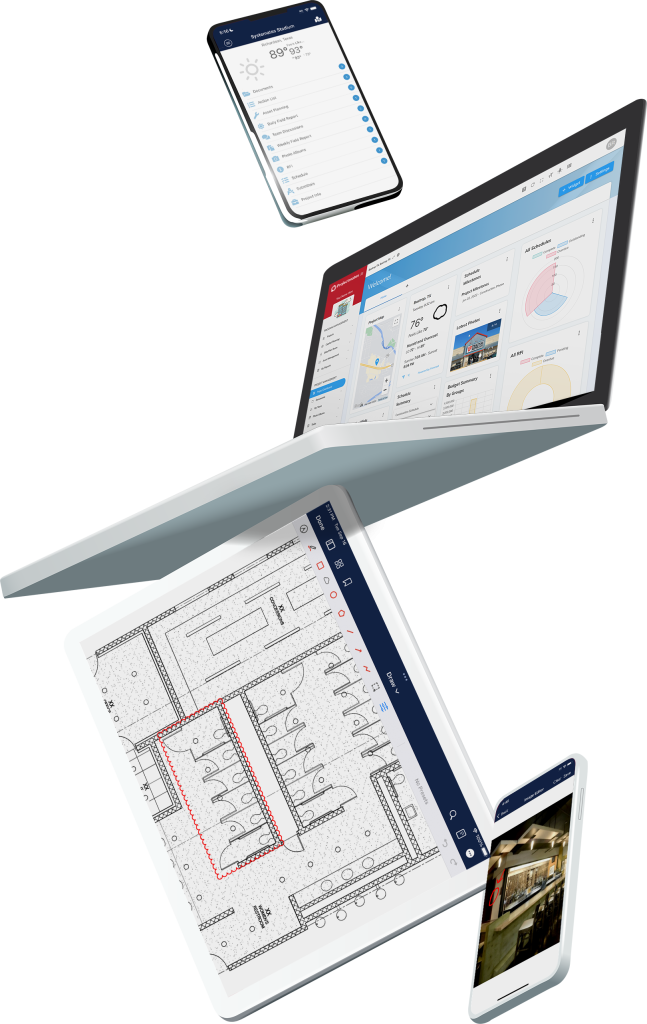
With construction program management software like Projectmates, you can easily identify, assess, and mitigate risk through your project’s lifecycle.
The result? More predictable project delivery and a healthier bottom line.
Risk is inherent in Construction
It’s crucial to understand that risk in construction is an inherent part of the industry. It’s how you handle that risk that determines success for construction projects.
You may believe that risks won’t affect you because you’ve hired a GC. That isn’t entirely the case. While your GC can and will manage certain risks, in the end, unmanaged risk and project uncertainties can lead to cost overruns, schedule delays, and poor quality.
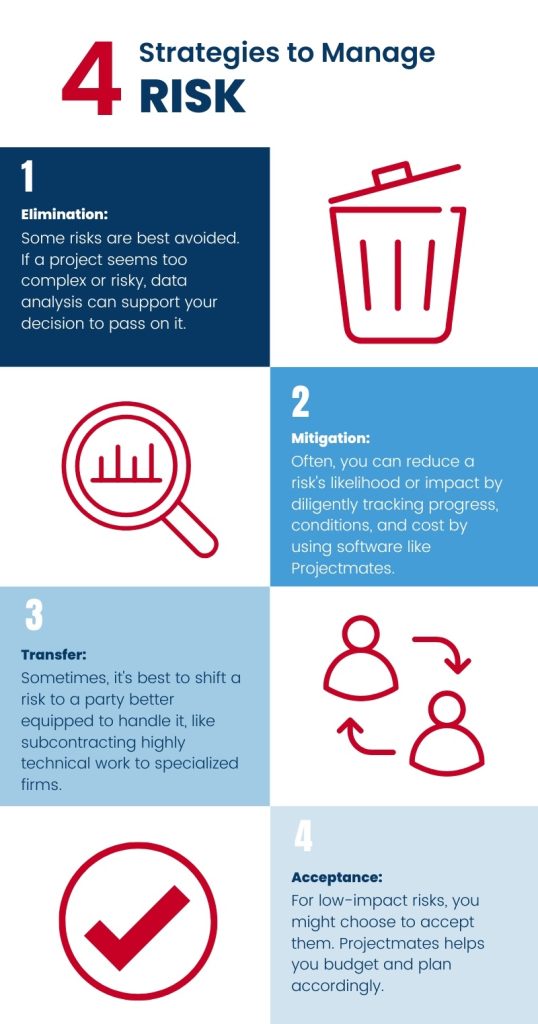
The key is not to avoid risk entirely—that’s impossible. Instead, that risk just has to be managed.
That’s where construction program management software can help.
Identifying and Assessing Risk
The first step in risk management is identification. Without recognizing potential risks, you can’t prepare for them. Construction program management software helps in this critical phase by providing a structured framework for risk identification.
Built-in tools, forms, and templates can alert you to common risk factors in construction projects. Visual cues let you know when items are overdue or if you’re approaching a budget overrun. Automated messages can also alert team members if their tasks aren’t being completed on time or if they have a new task to complete, reducing the likelihood of miscommunication.
Furthermore, construction program management software also allows for collaboration to help identify and transform risk. Your engineers, designers, and managers each bring a unique perspective on potential risks. The software facilitates this collective insight from the office and the field, ensuring a comprehensive risk identification process inside a single source of truth.
Once risks are identified, the software helps you assess their potential impact by empowering you with what-if scenarios and project trend data. Based on this information, you can gauge whether the risk is minimal or potentially devastating to your construction program and react accordingly.
The Future of Risk Management
As technology advances, so does an Owner’s ability to manage construction risks. Modern construction program management software already incorporates analytics to predict potential issues, integrates with business intelligence tools for better insight, and uses collaborative tools for a more diverse approach to mitigating unnecessary risk.
Contact us to learn how Projectmates can clarify your construction program for better risk detection, assessment, and mitigation.
Frequently Asked Questions About Embracing Digital Transformation in Construction
Waiting too long to implement a system that gives them visibility. By the time a risk shows up on an invoice or in a progress meeting, it’s often too late to avoid damage. The earlier you implement program-wide risk tools, the better positioned you are to adapt and succeed.
Yes. Risk is baked into every project—whether it’s unexpected site conditions, delays, cost creep, or coordination issues. The key isn’t trying to dodge risk entirely (you can’t), but knowing how to spot it early and take action before it snowballs.
Only partially. While your GC will handle jobsite execution risks, you—as the Owner—are still exposed to broader program-level risks. Budget misalignment, communication gaps, document control, and scope drift often fall outside the GC’s purview. If you’re not actively managing those, they can sneak up on you.
Construction program management software gives you tools to flag, track, and resolve risks before they turn into crises. Think of it like radar for your construction program: automated alerts, overdue flags, real-time budget visibility, and cross-team collaboration—all in one place.